Skip to content
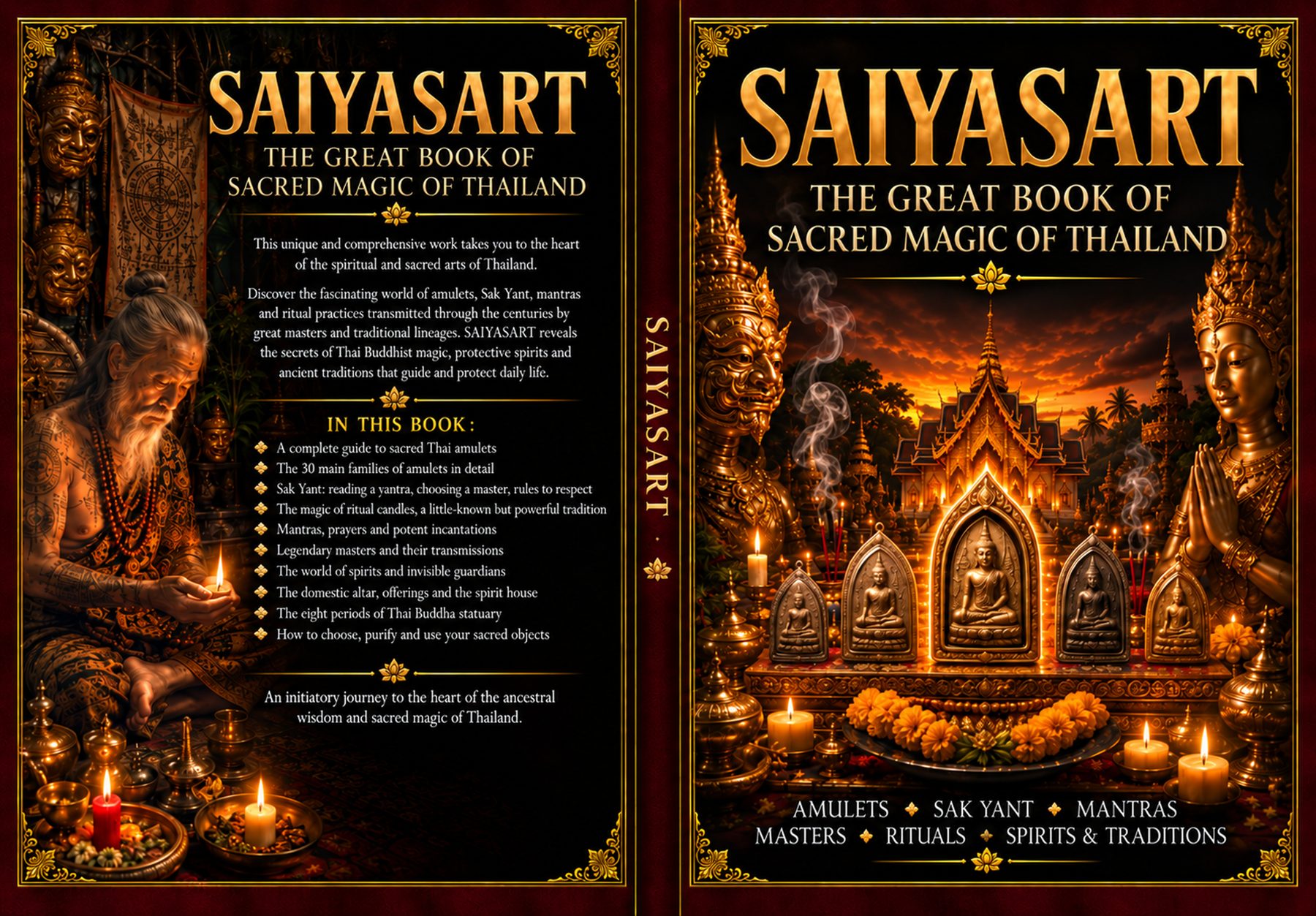
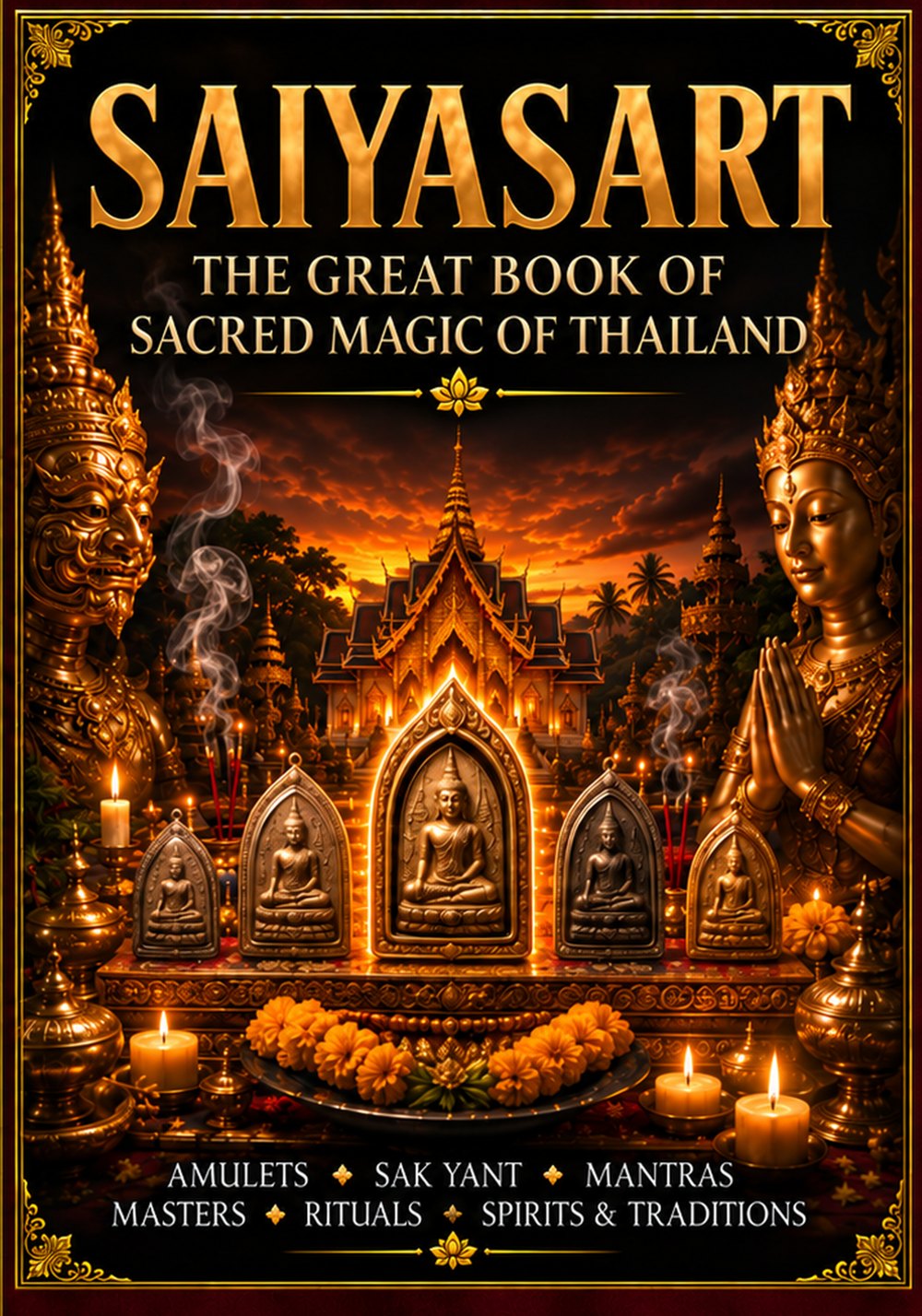
Cover of SAIYASART, The Great Book of Sacred Magic of Thailand
Éditions Magie-Thaï · Dhyan

SAIYASARTThe Great Book of Sacred Magic of Thailand

Thai amulets and talismans, Sak Yant, kathas, legendary masters, guardian spirits and everyday rituals: a reference guide to understanding, choosing and honouring the sacred objects of Thailand.

Full colour7 × 10 inISBN 979109905100430 amulet families120+ glossary entries

Paperback · available worldwide on Amazon

30families of amulets and talismans
33chapters in six parts
8periods of Buddha statuary
120+Thai and Pali terms explained
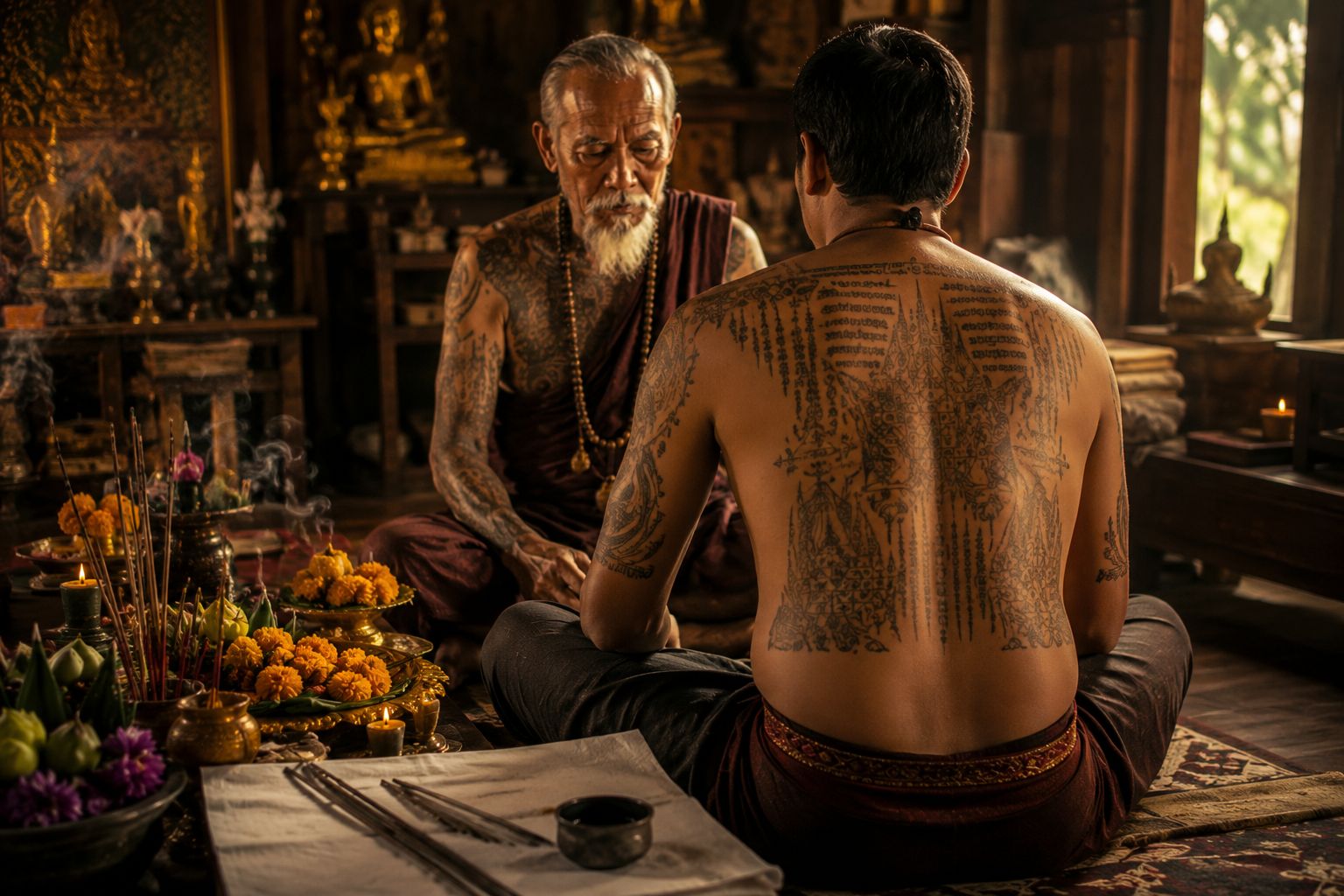
A Sak Yant master facing a disciple whose back is covered in sacred tattoos
The book

An initiatory journey into sacred Thailand

In Thailand, magic is not a folkloric curiosity: it is part of daily life, from the spirit house by the front door to the amulet worn over the heart. Saiyasart (ไสยศาสตร์) is this science of the sacred, woven from Theravada Buddhism, Brahmanic heritage and animist belief.

This book gathers that scattered knowledge into one clear, richly illustrated volume: where amulets come from, how to recognise them, what tattooed Yant say, who the great masters were, how to set up an altar and what to avoid.

It speaks both to the curious newcomer and to the collector who wants to sharpen their eye.

In this book

Amulets, talismans and Sak Yant: what you will discover

  1. FoundationsBuddhism, animism and magic; the world of spirits; the five stages of an amulet's consecration (Puttapisek).
  2. The great mastersSomdej Toh, the legend of Khun Phaen, the Benjapakee, and portraits of masters past and present.
  3. Types of amuletsProtection, health, fortune, charm, power; Nang Kwak, Lek Lai, Kuman Thong, Palad Khik and 30 families summarised.
  4. Sak Yant, the sacred tattooReading a Yant, the main designs, Wai Kroo, what to do and not to do, ritual candles.
  5. Lanna sorceryThe northern Wicha, In Koo and twin amulets, the great Lanna masters and their ritual objects.
  6. Perspectives and sourcesEight periods of statuary, places to visit, kathas, the altar and the spirit house, living with your amulets.
Browse

A few pages from the book

Six passages from the thirty-three chapters, to set the tone: researched text, full-page illustrations, and constant respect for a living tradition.

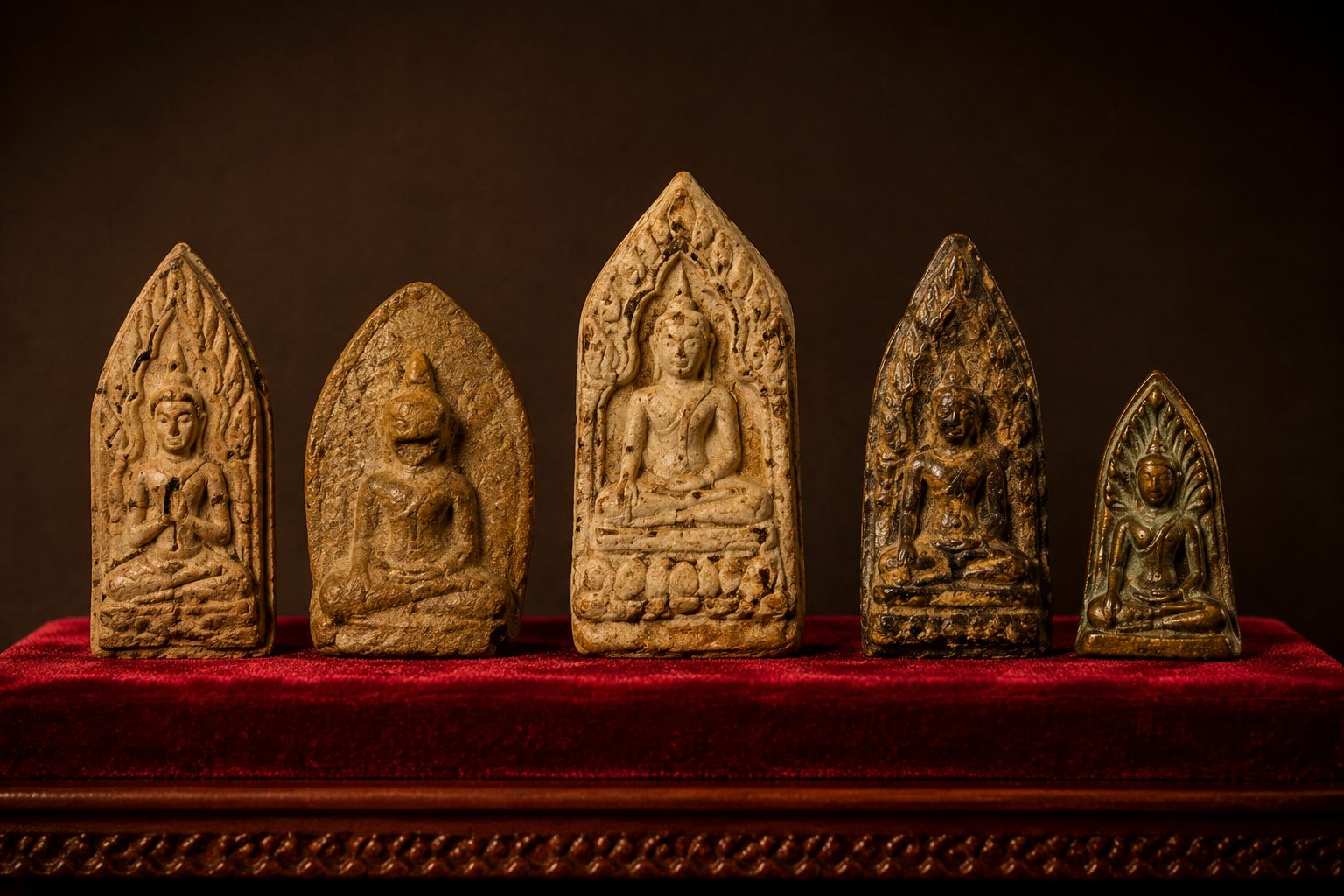
The five Benjapakee amulets lined up on red velvet
Chapter 5 · The Benjapakee
Chapter 5

The Benjapakee, the five supreme amulets

This ranking is no ancient legend: it was formalised at the very beginning of the 1950s — around 1952 — by an identified figure of the milieu, a collector and writer who signed himself Triyampawai […], keen to give enthusiasts a simple point of reference amid an already teeming market.

Bangkok for the Phra Somdej, Phitsanulok for the Phra Nang Phaya, Lamphun for the Phra Rod, Suphanburi for the Phra Phong Suphan, Kamphaeng Phet for the Phra Somkor. It is not a symbolic pantheon: it is a map.
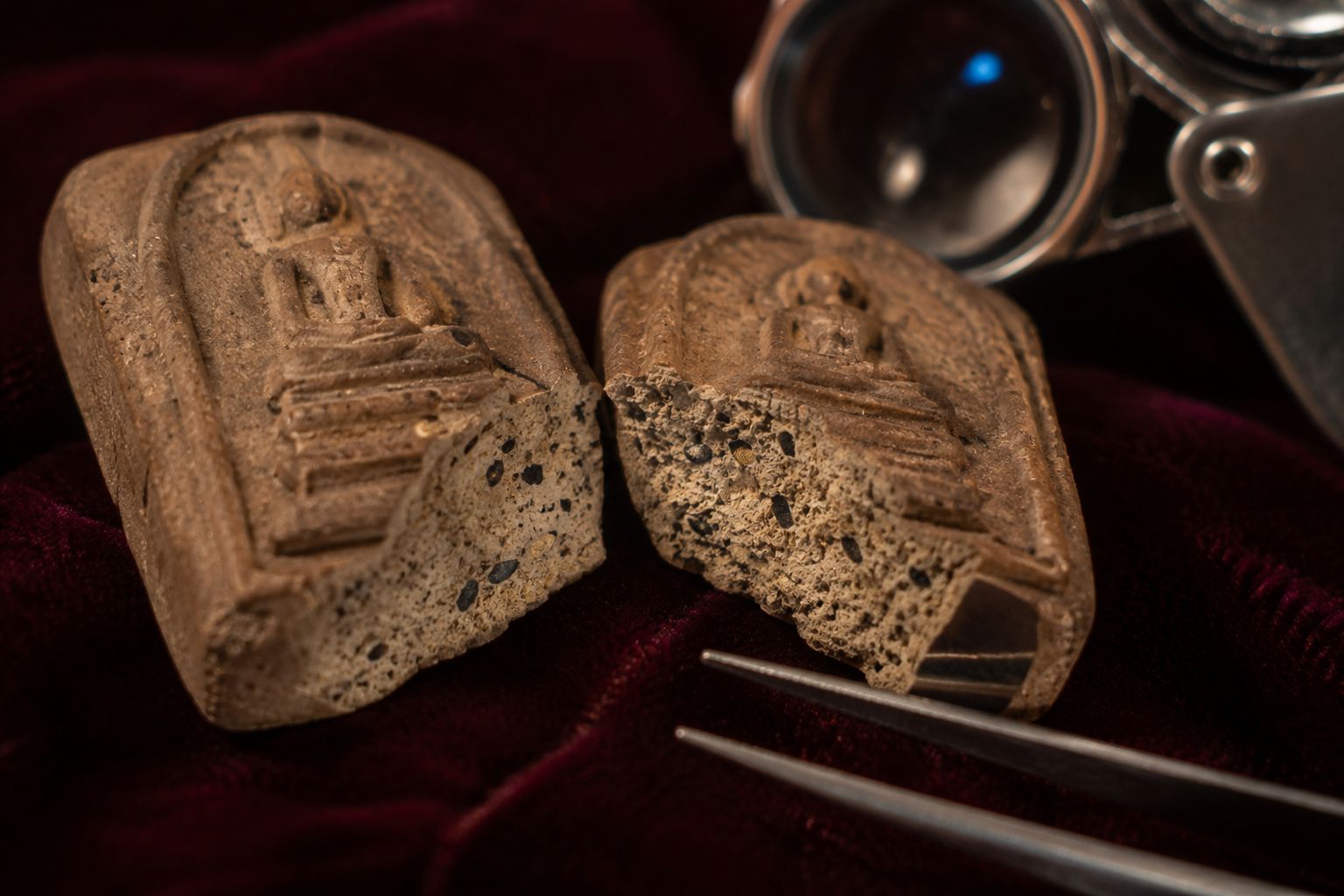
Two broken Somdej amulets showing their texture, next to a loupe and tweezers
Chapter 5 · Reference pieces and favoured moulds
Chapter 5

Reference pieces and “favoured” moulds

The first is that of Ongk Kroo — literally “the master piece”, or “the piece that teaches”. It is a specific, identified and published example against which all others will be compared.

A Nork Pim piece is often wrongly taken for a fake when it is authentic, and it remains affordable when the same amulet from the fashionable mould has become unattainable. If one buys out of devotion rather than speculation, the market's hierarchy has, strictly speaking, no reason to impose itself on one.

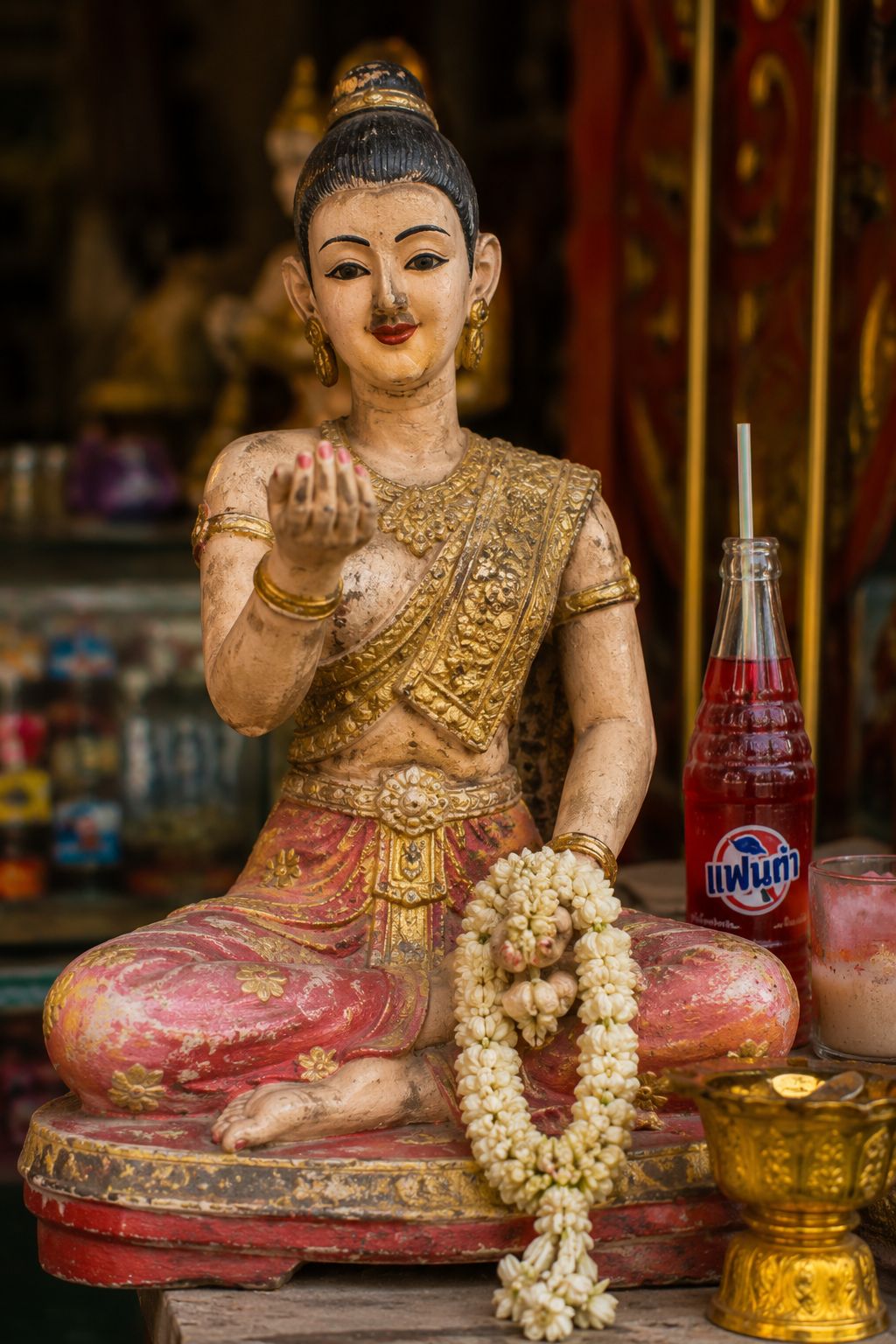
Statue of Nang Gwak (Nang Kwak), the beckoning lady, on an altar with offerings
Chapter 13 · Nang Gwak, the lady who beckons fortune
Chapter 13

Where does Nang Gwak come from?

Her parents soon noticed that on the days their daughter rode in the cart, everything sold, and on the days she stayed at home, sales were poor. They made sure she always came with them, and became rich.

This is the version most temples keep, and it has one considerable merit: it does not make Nang Gwak a goddess of luck, but a young woman whose fortune comes from having listened, understood and practised. What one invokes in her is not a power, but the fruit of conduct.

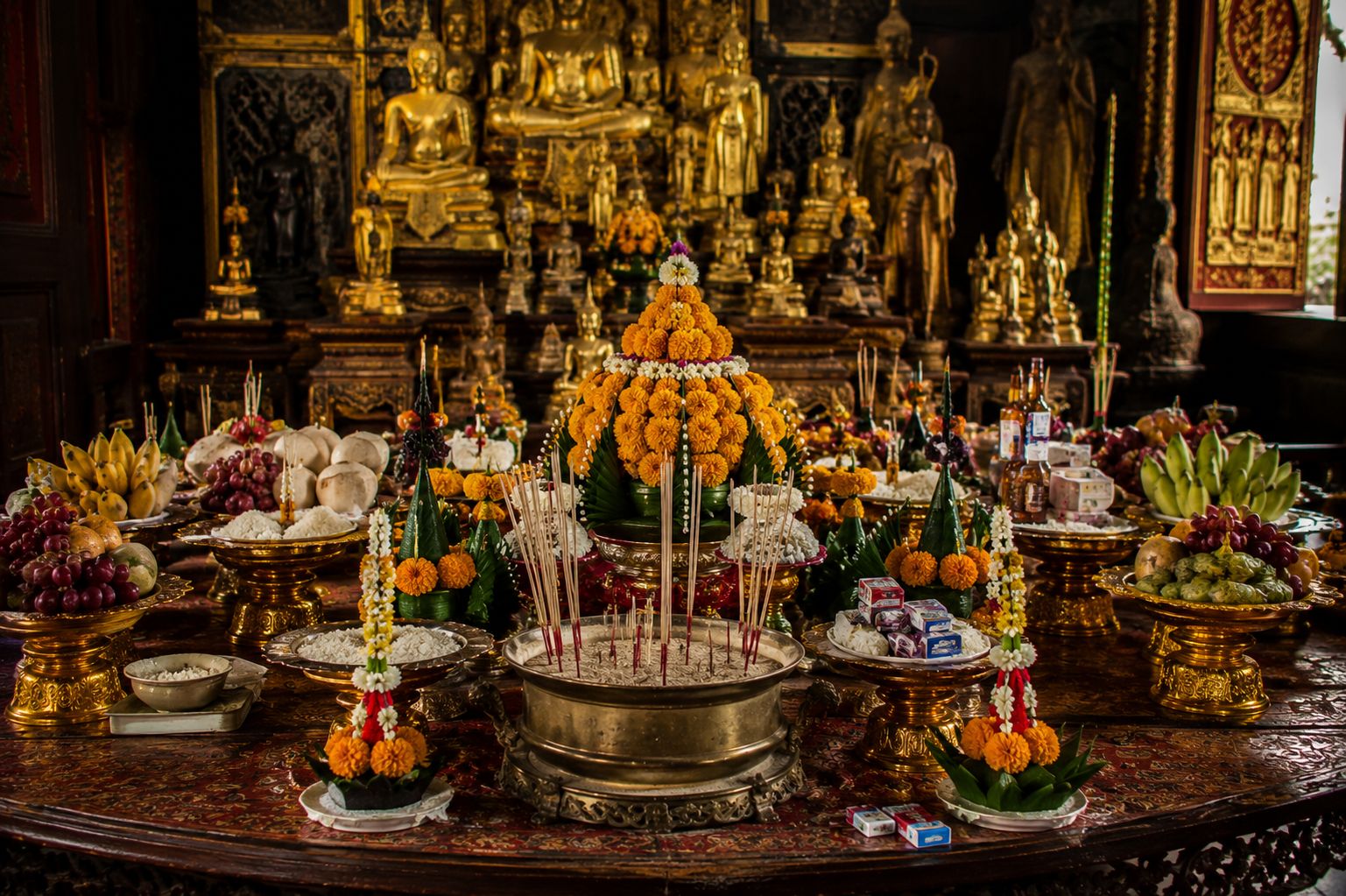
Offering table before an altar of golden Buddhas during a Wai Kroo ceremony
Chapter 20 · The Wai Kroo ritual
Chapter 20

Wai Kroo, honouring the masters

Receiving a Sak Yant does not end the relationship between disciple and master: it begins it. This is the whole meaning of the Wai Kroo ceremony (“salutation to the master”), traditionally held once a year in the great temples renowned for their master tattooists.

The point most often unknown in the West is that the Wai Kroo does not belong to the world of magic. It is a general Thai institution. Classical musicians hold one […]; dancers, craftsmen, masters of arms and teachers have theirs.

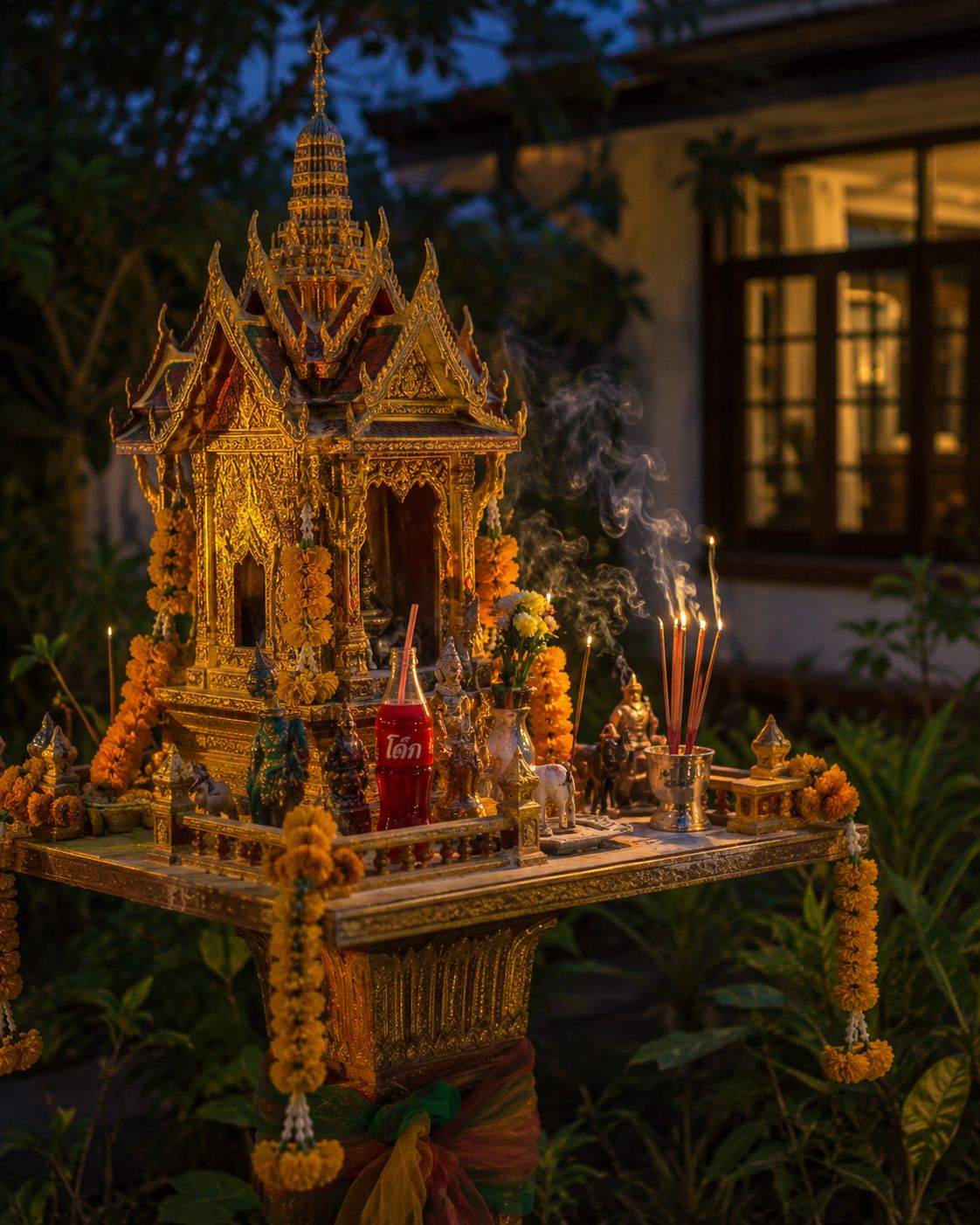
Golden spirit house decorated with marigold garlands at dusk
Chapter 29 · The spirit house
Chapter 29

The altar, the house and offerings

What is less well known is that these little houses are not all of the same nature, and that their architecture says so. The Saan Phra Phum proper, intended for a celestial deity, stands on a single pillar; altars intended for the genie of the place or for wandering spirits have four or more.

The number of legs is therefore information, not decorative whimsy: anyone who knows how to look sees immediately which order of occupant the little house is meant for.

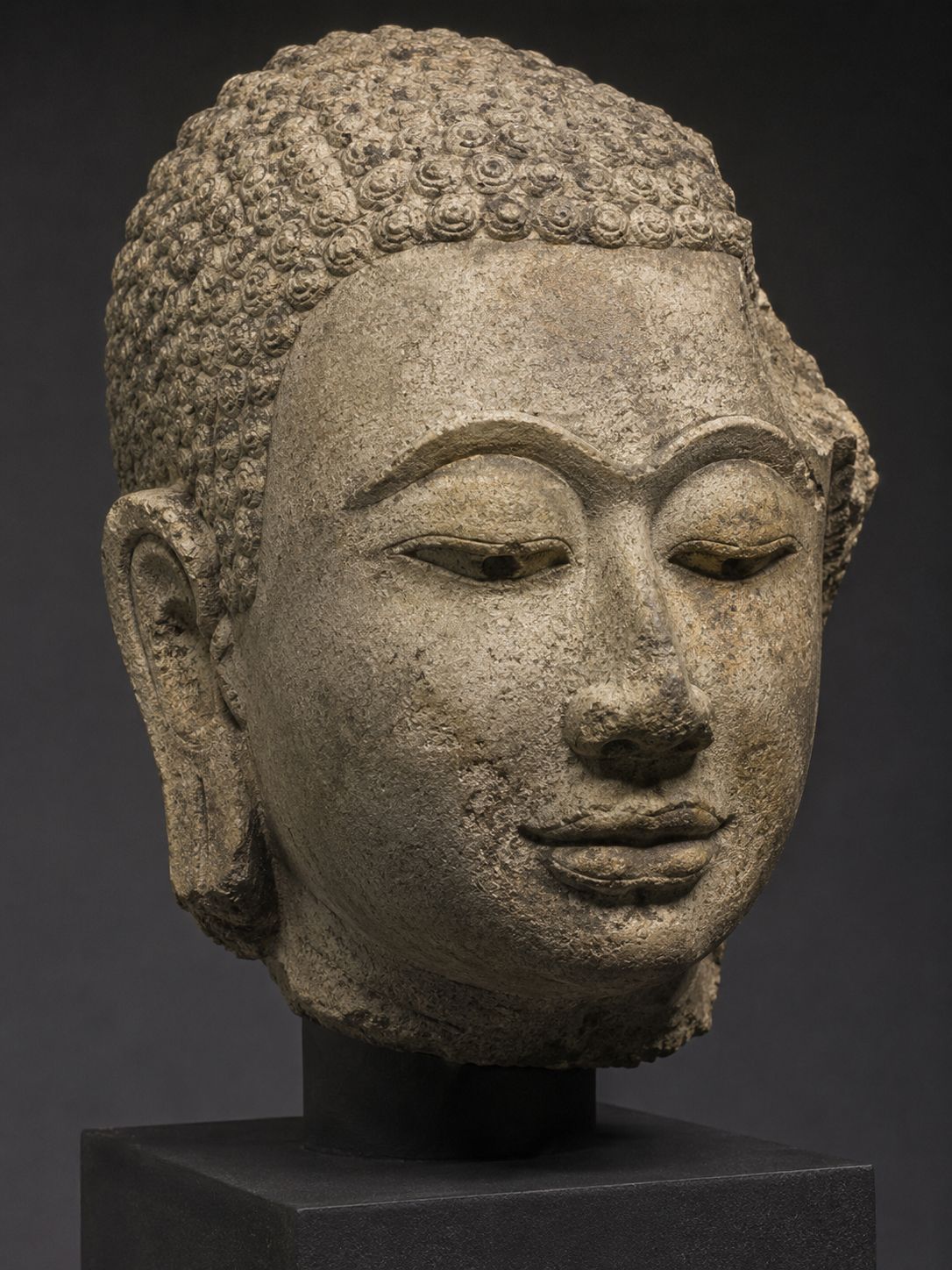
Stone Buddha head in Dvaravati style
Chapter 26 · The Dvaravati period
Chapter 26

Eight periods of statuary

One face is square, almost stern, the eyebrows joined in a single line; the next is an elongated oval, smiling, topped with a flame. Between the two lie eight centuries.

It is recognisable by its broad, frontal faces, eyebrows joined in a single continuous arch, thick lips […]. It is the sculpture most foreign to the modern eye, and the most moving: in it one sees a Southeast Asia that has not yet invented its own face.

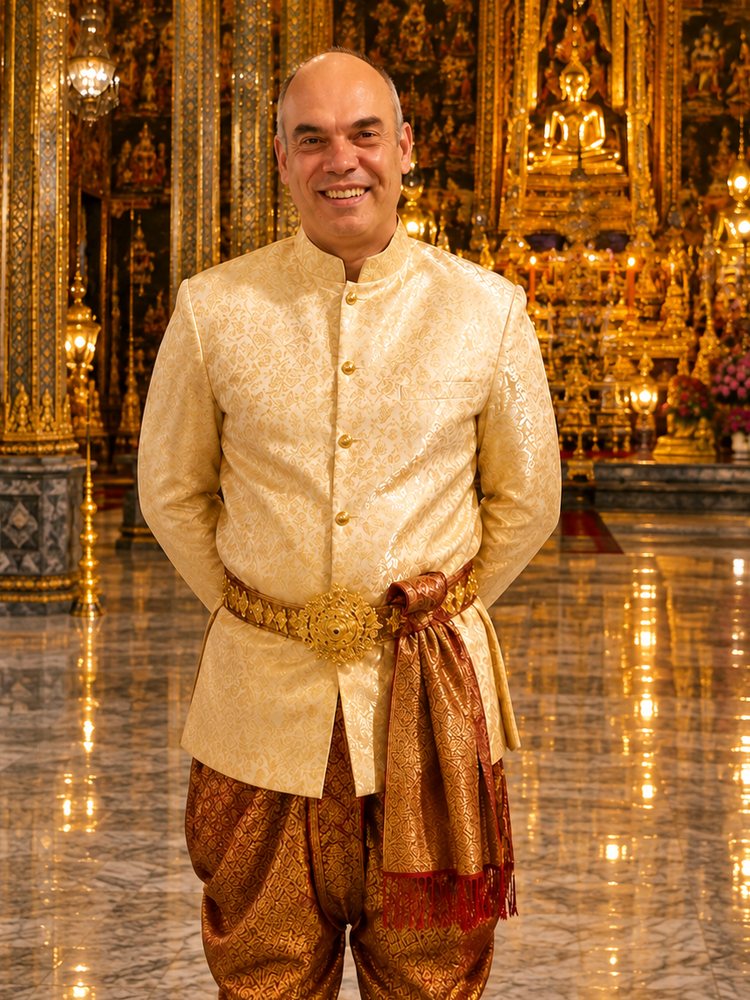
Dhyan, author of SAIYASART, in traditional Thai dress in a temple
The author

Dhyan

A practising Buddhist since the late 1980s, Dhyan received the refuge name Sonam Tsering. Some fifteen years ago he founded Magie-Thaï, an online shop of sacred amulets sourced from masters and temples in Thailand, which has become a reference for French-speaking collectors.

He also runs claire-lumiere.org, an online library on spirituality and Eastern traditions, and supports projects in Madagascar for children's schooling, family assistance and medical care.

Under the name Sonam Tsering, he is also the author of Buddha for Kids.

FAQ

Before you order

Where can I buy the book?

SAIYASART is printed on demand and sold on Amazon, shipped wherever Amazon delivers. See the book on Amazon.

Do I need to know Buddhism to read it?

No. Every notion is introduced simply, and the glossary of more than 120 entries explains the Thai and Pali terms. Seasoned readers will also find details rarely published in Western languages.

Is it a book for collectors?

Largely, yes: amulet families, materials, moulds, reference pieces, advice on buying and care. It also covers Sak Yant, rituals, spirits and statuary.

Is it illustrated in colour?

Yes, printed in premium colour with more than a hundred illustrated pages.

Is there a French edition?

Yes: SAIYASART — Le Grand Livre de la Magie Sacrée de Thaïlande is available on Amazon.fr.

Available now

Open the doors of sacred Thailand

Full-colour paperback · ISBN 9791099051004

Order on Amazon