Sak Yant, the sacred Thai tattoo
Meaning, great masters, how a session unfolds, rules and hygiene: what to know before getting tattooed in Thailand.
The word has two parts: Sak, “to tap, to tattoo”, and Yant, the Thai form of the Sanskrit yantra, a sacred diagram. A Sak Yant is a yantra tattooed on the skin — the bodily, permanent version of a device also found painted on cloth, inscribed above doorways, embroidered on ritual shirts or worked into the wax of candles.
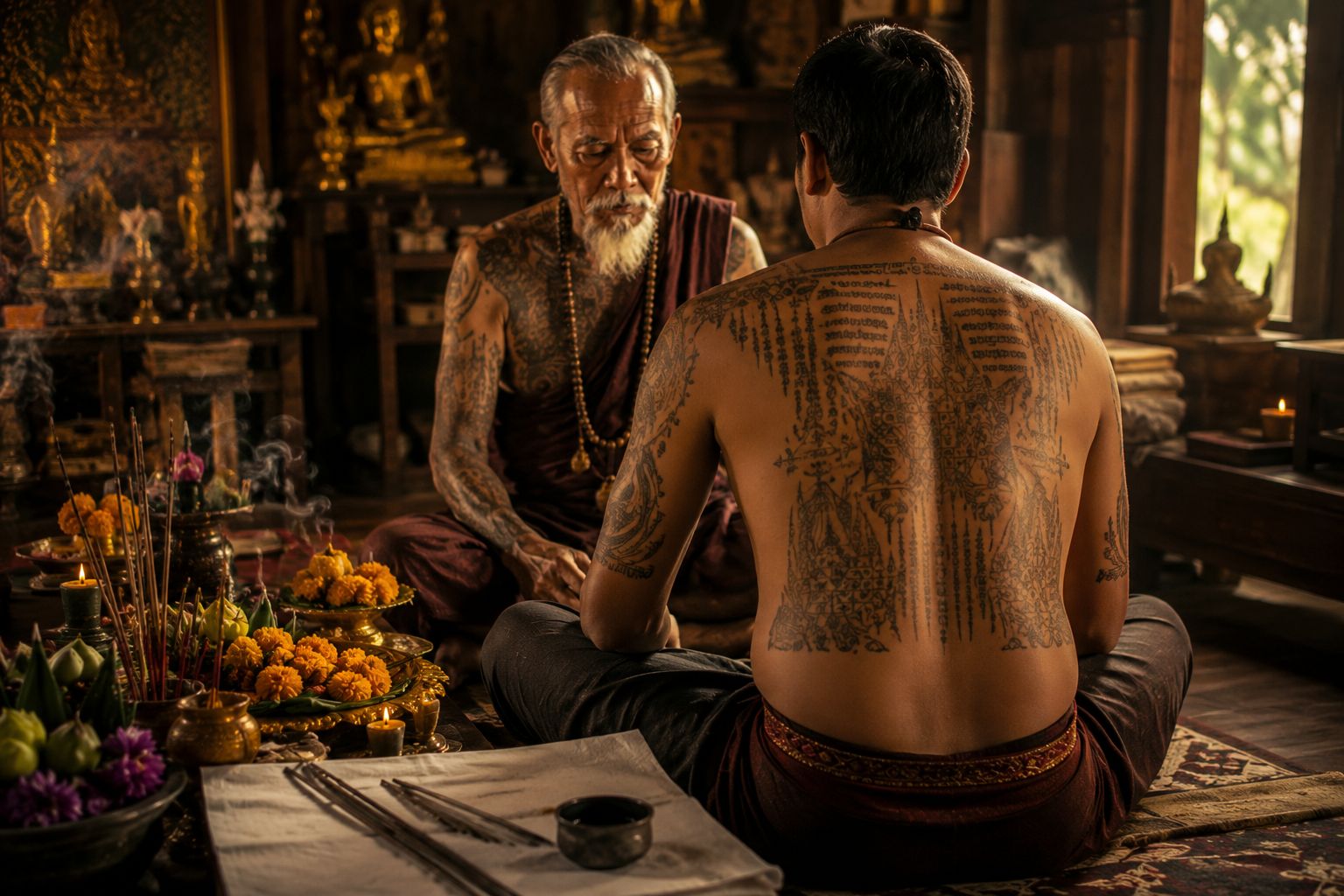
What sets a Sak Yant apart from a decorative tattoo is that the design alone is never enough: as it is applied, the master must accompany it with his breath and the recitation of a Kata, which “activates” it. A Yant copied exactly by an uninitiated tattooist remains, in the eyes of tradition, empty of its sacred dimension.
Origins
Sacred tattooing goes back at least a thousand years in Southeast Asia, at the crossroads of animist beliefs, Brahmanic influences from India via the Khmer kingdom, and Theravada Buddhism. But it was in the Ayutthaya period, under King Naresuan, that it became a warrior practice: soldiers covered their bodies in protective designs, convinced they would make their skin impervious to blades, and later to bullets. Over time the designs diversified: protection, luck, career success, charisma, attraction, peace of mind.
Some famous designs
- Yant Ha Taew, “five rows” — five lines of seals and formulas, each linked to a different protection. The best known in the West.
- Yant Paed Tidt, “eight directions” — inscriptions arranged in a star around a central point, for protection in every direction.
- The animals of the Himapant, the mythical forest: the tiger for charisma and personal power, the Naga for protection and wisdom, the Hongsa bird for elegance and social success.
A key difference from Western tattooing: the client does not choose the design. Traditionally, the master decides which Yant is most appropriate after talking with the person about their situation and needs.
The masters who shaped modern Sak Yant
Luang Por Phern of Wat Bang Phra (Nakhon Pathom) is the best known. The leaping tiger that became the international emblem of Sak Yant comes from him, and it is his annual ceremony that has been seen around the world. He also set the most widely followed list of prohibitions.
Luang Por Guay of Wat Kositaram (Chai Nat) kept a register of his disciples: more than fifty-five thousand names, at a time when people walked to the temple. And Luang Por Pratueang of Wat Dan Charoen Chai (Phetchabun) was known for publicly testing the power of his tattoos.
It is not the ink that protects, it is the commitment it seals.
SAIYASART, chapter 17
Visiting a master
The offerings are not left to choice, and everything can be found at the garland sellers outside temples: a garland of flowers, incense sticks, yellow candles, a small packet of betel nuts with leaves and tobacco — or, failing that, a packet of cigarettes — and a sum of money whose amount is never displayed: ask other visitors beforehand.
- Place your offerings and envelope on the tray you are given.
- Approach the master on your knees, never standing.
- Hold out the tray, head slightly bowed, and only let go after his blessing.
- Bow three times, then position yourself as he indicates.
- During the tattoo, keep your hands joined before your forehead if the placement allows; otherwise stay still and silent.
- At the end the master recites over the design and blows on it: that breath activates it. Prostrate three times, and leave.
Hygiene
Traditional Sak Yant is done with a long hand-held needle, and in many studios that needle is simply wiped between clients. No case of HIV transmission through a Sak Yant is documented, but hepatitis B and C are a real risk: an invisible trace of blood is enough, and hepatitis B survives a long time on a surface. Several major temples, including Wat Bang Phra, have switched to disposable tissues and ban tattooing minors, but sterilisers remain rare. Insist on seeing the needle come out of new packaging, or bring your own. A serious master will not take offence; one who does tells you something about himself.
The rules
Receiving a Sak Yant means entering a lasting relationship of respect. The essentials are the five precepts of Buddhism — do not kill, steal or lie, no sexual misconduct, no substances that cloud judgement — which tradition holds to be the very condition of the Yant's power. Each lineage adds its own prohibitions: Luang Por Phern's forbid, for instance, walking under hanging laundry or under a house on stilts, and certain foods depending on the design received.
Some contemporary masters give a shorter, frankly ethical version: do not speak ill of your parents or your master, do not fight with fellow disciples, do not get drunk, do not boast of being protected — and do not imagine the Yant will protect someone who uses its protection to do wrong.
Wai Kroo, honouring the master
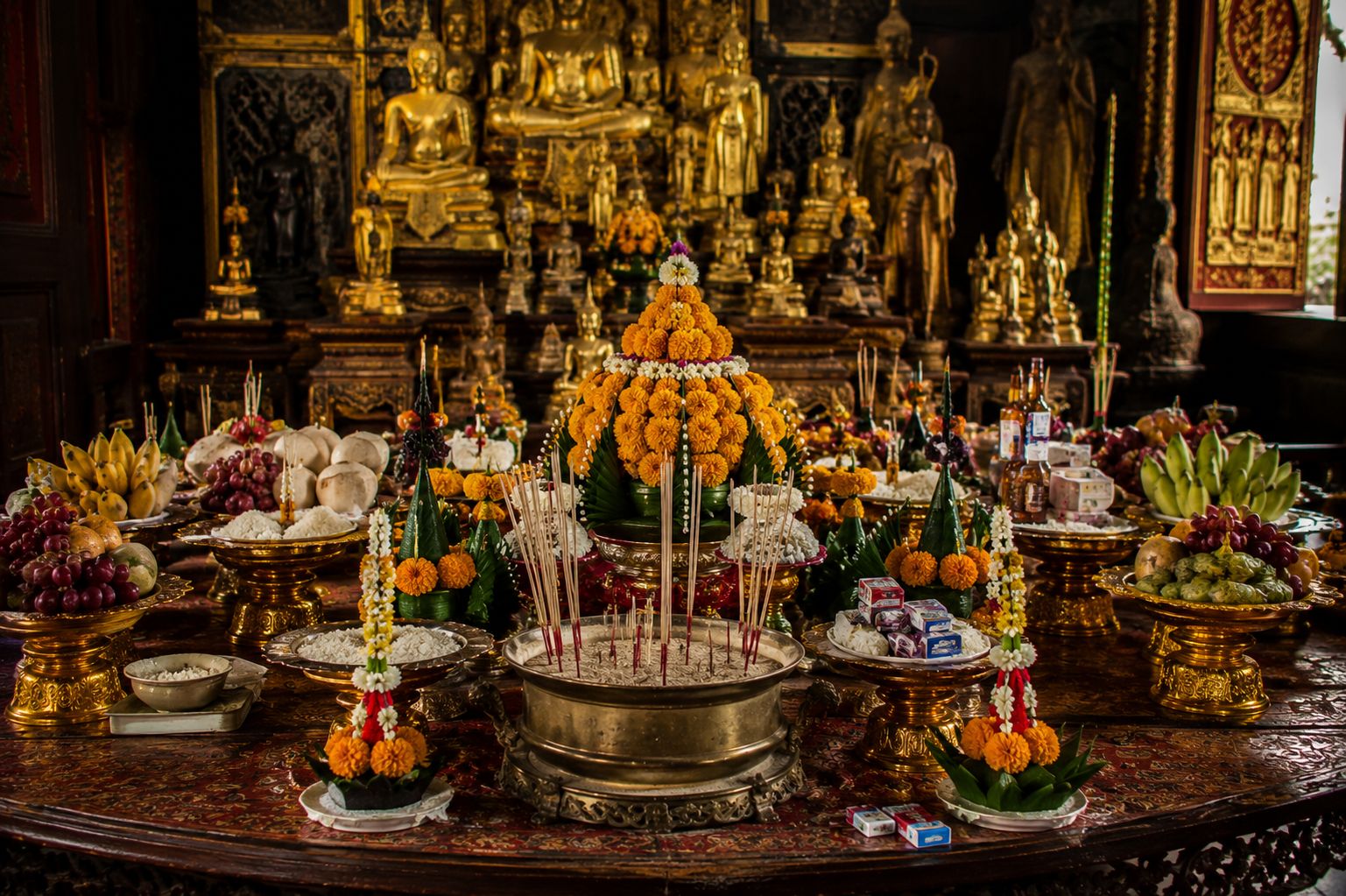
Receiving a Sak Yant does not end the relationship with the master: it begins it. Every year the Wai Kroo (“salutation to the master”) brings disciples together to renew that bond. The most famous is held at Wat Bang Phra at the beginning of March: thousands of Sak Yant bearers, offerings, collective recitations, and monks who “recharge” the tattoos with their breath. This is also where the famous trance scenes occur, as some participants take on the behaviour of the animal on their Yant.
On the altar, masks — the Siarn Bucha — represent the primordial masters. And Wai Kroo is not limited to magic: musicians, dancers, craftsmen, masters of arms and teachers all hold their own.
Frequently asked questions
What does Sak Yant mean?
“Sak” means to tap or tattoo, and “Yant” comes from the Sanskrit yantra, a sacred diagram. A Sak Yant is a yantra tattooed on the skin, “activated” by the master's breath and recitation of a Kata.
Can a foreigner get a Sak Yant?
Yes, many masters welcome foreigners. In return, tradition asks you to respect the master, the offerings and the codified course of the session, and the rules of conduct that come with the Yant.
Is Sak Yant a health risk?
The main risk is hepatitis B and C, which can be transmitted by a poorly cleaned needle. Insist on seeing the needle taken out of new packaging, or bring your own: a serious master will not take offence.
When is the Wai Kroo at Wat Bang Phra?
Traditionally at the beginning of March, at Wat Bang Phra in Nakhon Pathom province, about an hour's drive from Bangkok.
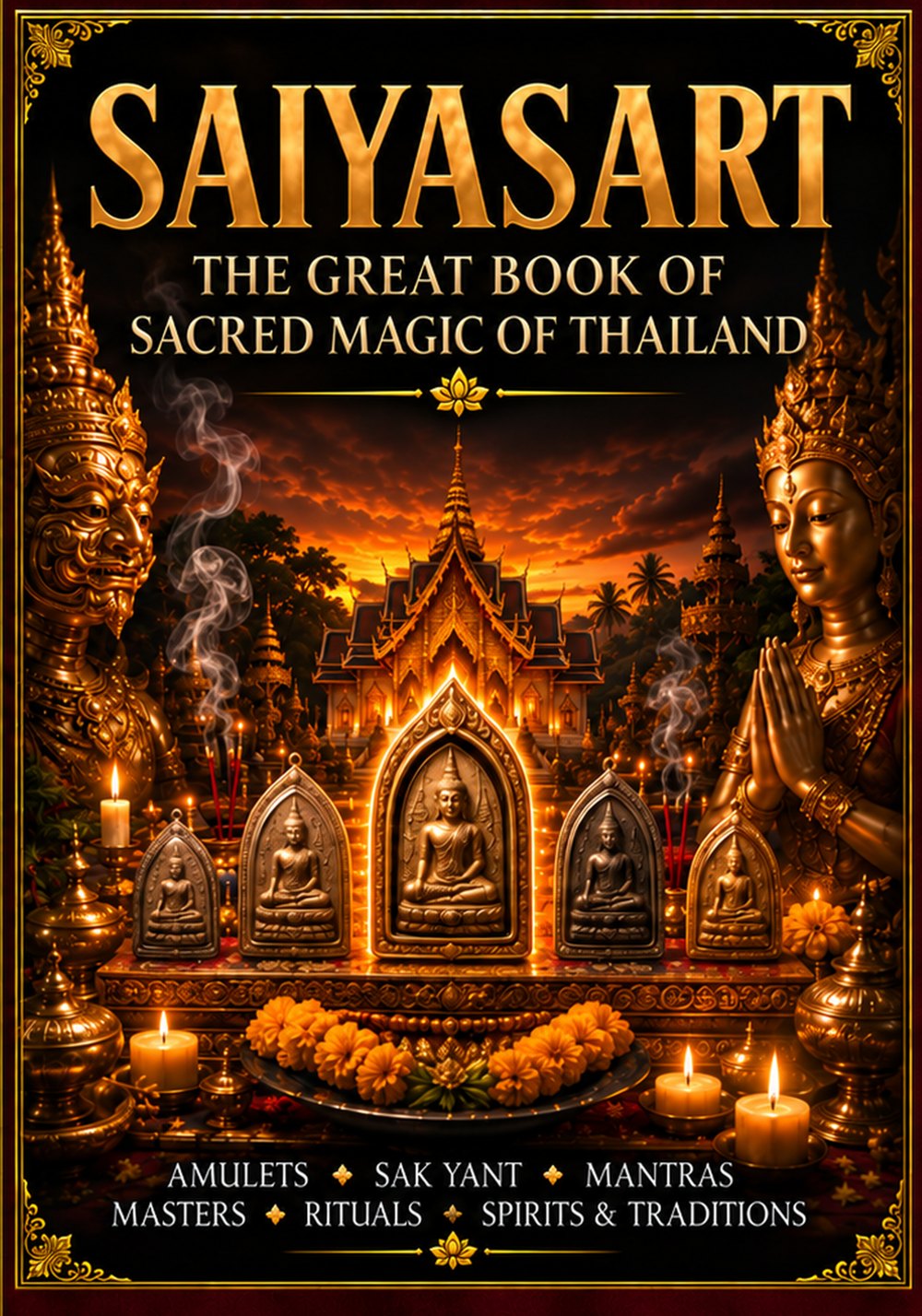
Go further with the book
This page covers only a small part of SAIYASART — The Great Book of Sacred Magic of Thailand: 33 chapters in full colour, 30 families of amulets and talismans, and a 120-term glossary.