Kuman Thong (Gumarn Tong)
The protective effigy of the Thai home: its legend, the master of Wat Sam Ngam, how to welcome it — and what to refuse.
The Kuman Thong — Gumarn Tong in the collectors' spelling — is an effigy of a young child, usually covered in gold leaf: the name literally means “golden child”. Whoever welcomes one into their home treats it with almost parental affection, believing it watches over the house like an invisible protective child.
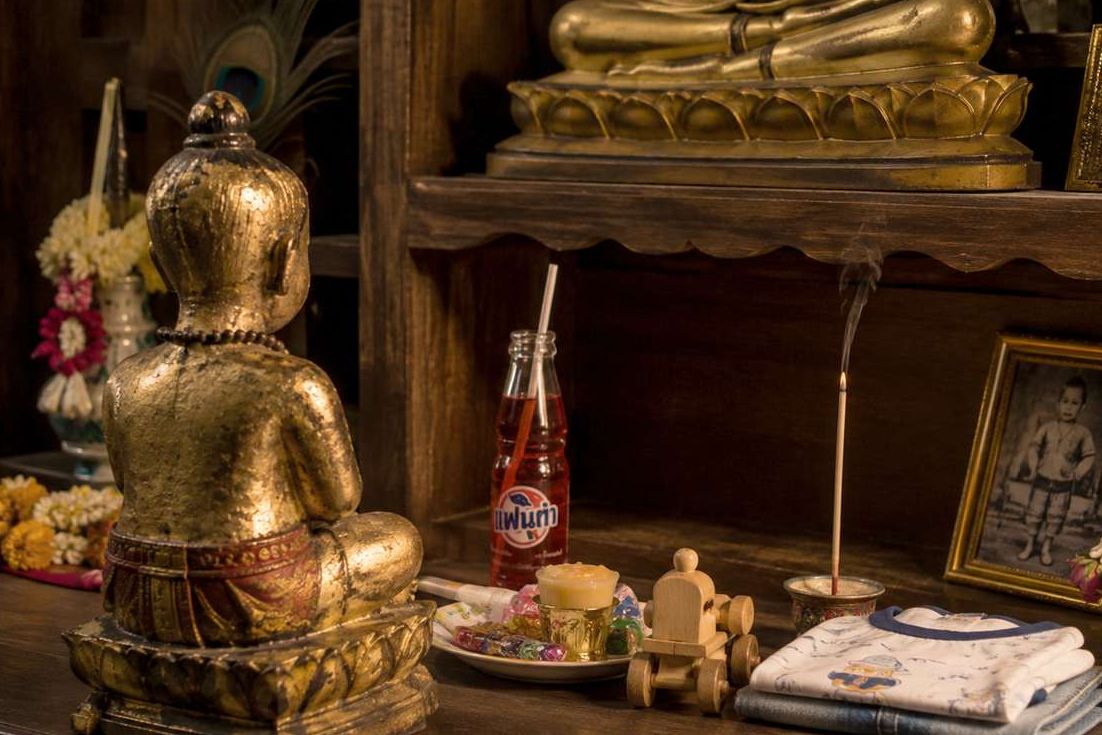
Between legend and practice
Legend links the Kuman Thong to the story of Khun Phaen, the semi-legendary hero of Thailand's most famous epic, credited with a whole arsenal of war magic. The stories attribute extreme funerary practices to its oldest origins.
Contemporary practice has nothing to do with those stories. In the vast majority of cases, the Kuman Thong sold and venerated today are made of ordinary materials — wood, resin, metal, clay, plants and powders — then consecrated by the recitation of mantras. They are talismans of a protective, benevolent nature.
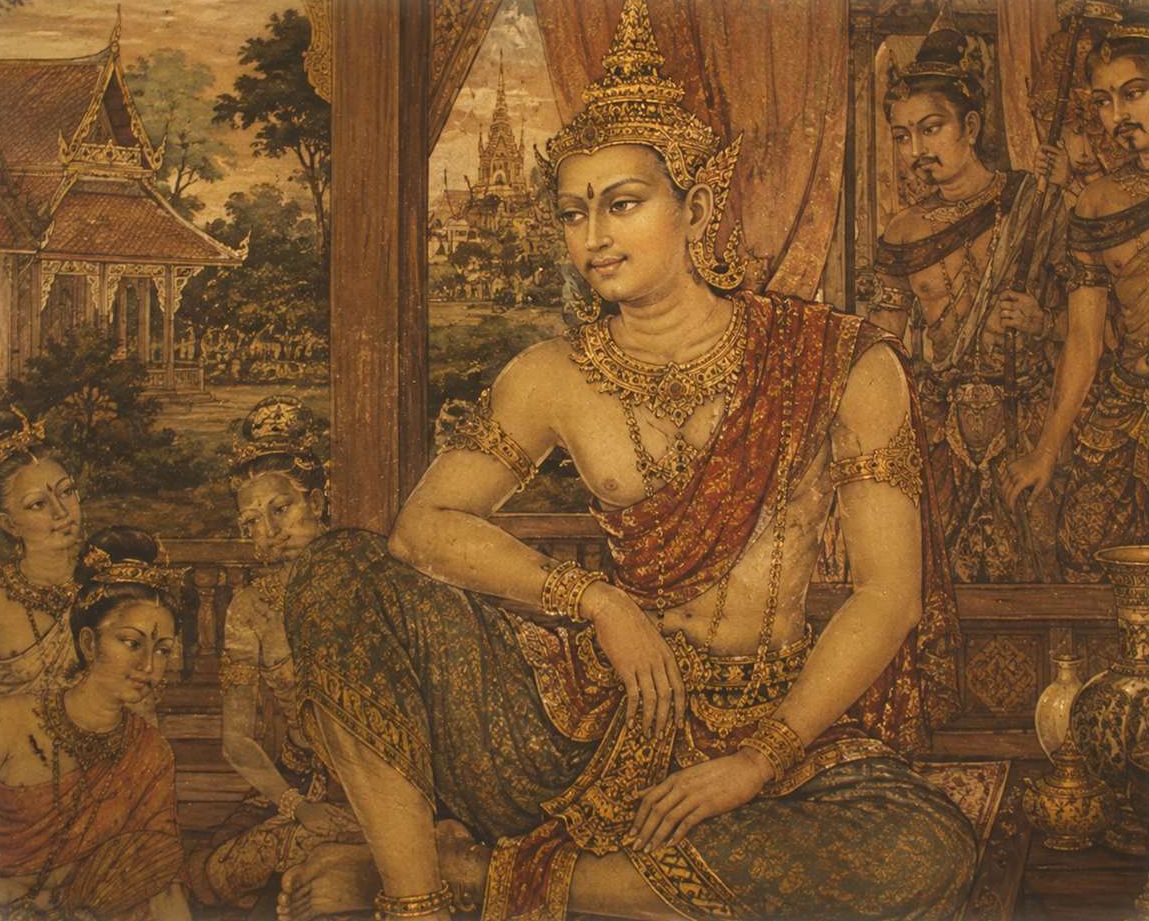
Luang Por Te and Wat Sam Ngam
One name dominates this tradition: Luang Por Te Kong Thong of Wat Sam Ngam, in Nakhon Pathom. Born in 1891, taught Khom script from the age of seven by a monk uncle, ordained at twenty-one, he spent twenty-two years in ascetic wandering gathering Wicha from successive masters — including a Khmer lay master, a former officer, for whom he kept a lifelong deference. As abbot, he built a hospital, schools and a dispensary around his temple. He died in 1981.
His child effigies, shaped from ritual earth gathered in places held to be charged, made Wat Sam Ngam the reference for the Kuman Thong; his successor continues the same Wicha. Yet the most remarkable thing is what he said about it: he refused to let people take refuge in magical powers. Magic is not permanent; you can have it and lose it. If invulnerability worked to the end, those who wear it would never die. The only thing that does not come undone, he said, is the Dhamma.
Coming from the most famous maker of effigies of the century, the warning is worth pondering by anyone who buys an amulet.
SAIYASART, chapter 15
How to welcome a Kuman Thong
- First, on the threshold, tell the deities of the place that a new presence is entering the house.
- Present the child to the household altar.
- Give it a first name — the decisive gesture.
- Place it on a stand always lower than the Buddha, never at the same height.
- Feed it every day, but from its own dish: serving it from your plate would treat it as a pet, not a child.
- Offer no alcohol and nothing contrary to the precepts: such lapses are believed to make its charge slowly “turn”.
- When you feel it has helped you, thank it with a gift: a toy, a sweet, a piece of clothing.
What to refuse
Some sellers offer objects said to contain human material, playing on fascination with the darkest stories. Making and selling them is illegal in Thailand and regularly prosecuted. A serious master will never offer you one; a seller who uses that argument tells you, without meaning to, everything you need to know about him.
Frequently asked questions
What is a Kuman Thong?
An effigy of a child, usually covered in gold leaf — the name means “golden child”. It is kept in the home, where it is believed to watch over the household like a protective child.
Kuman Thong, Gumarn Tong, Khuman Thong: the same thing?
Yes. Kuman Thong is the official transliteration; Gumarn Tong is the collectors' spelling used in the book; Khuman Thong is also common.
Does a Kuman Thong contain human remains?
No: the vast majority are made of wood, resin, clay, plants and consecrated powders. Objects presented as containing human material are illegal in Thailand and prosecuted. A seller who uses that argument disqualifies himself.
See also: spirits, effigies and protectors · Nang Kwak · the glossary.

Go further with the book
This page covers only a small part of SAIYASART — The Great Book of Sacred Magic of Thailand: 33 chapters in full colour, 30 families of amulets and talismans, and a 120-term glossary.