Nang Kwak (Nang Gwak)
Meaning, legends and use of the most popular Thai figure of prosperity — and of her companion Chuchok.
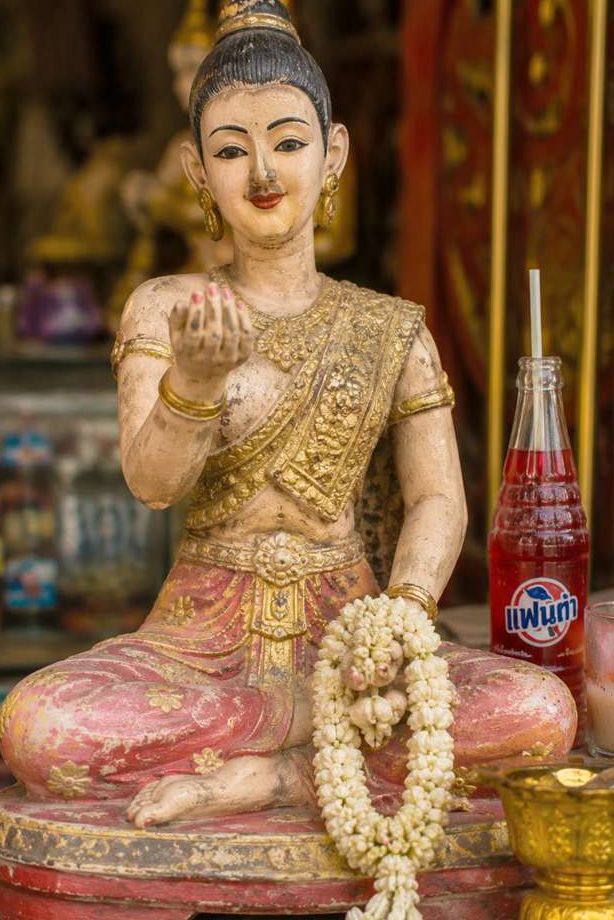
In countless Thai shops, a young woman in traditional dress, seated or kneeling, raises her right hand towards passers-by. This is Nang Kwak — Nang Gwak in the collectors' spelling — the lady who beckons fortune. She comes as a statuette or a miniature amulet, set at shop entrances or on the household altar to draw customers and prosperity.
The meaning of the gesture
Her name says it all: “the lady who beckons with her hand”. Western eyes often mistake the gesture for a wave. The raised right hand, palm down, fingers curled towards oneself, is the Thai gesture of calling: it means “come here”, not “goodbye”. That gesture, gwak, gave her her name.
Where does Nang Kwak come from? Two stories
Tradition disagrees about her origins, and the two versions are too different to reconcile: one is Indian and Buddhist, the other Thai and animist.
Supawadee, the merchants' daughter
The first makes her a real young woman, a contemporary of the Buddha, named Supawadee. Her parents, small travelling traders in the kingdom of Savatthi, eventually buy a cart to sell from village to village. On one journey Supawadee hears an arahant preach, takes refuge in the Three Jewels and receives a blessing of fortune; later Phra Sivali adds his own.
Her parents soon noticed that on the days their daughter rode in the cart, everything sold, and on the days she stayed at home, sales were poor. They made sure she always came with them, and became rich.
SAIYASART, chapter 13
This is the version most temples keep. It does not make Nang Kwak a goddess of luck, but a young woman whose fortune came from listening, understanding and practising — what is invoked in her is not a power, but the fruit of conduct.
The daughter of the forest lord
The second version, from the animist and Ramayana tradition, makes her the daughter of a forest lord of the first heaven of Brahmanic cosmology. Wherever she settles, merchants and nobles flock of their own accord and shower the house with gifts.
From cart to shop
The shift from one story to the other happened through images. Old statues showed a woman seated in a merchant's cart; Brahmins settled in Siam depicted her instead seated in a shop, right hand raised — the Nang Kwak we know today.
The link with Phra Sivali
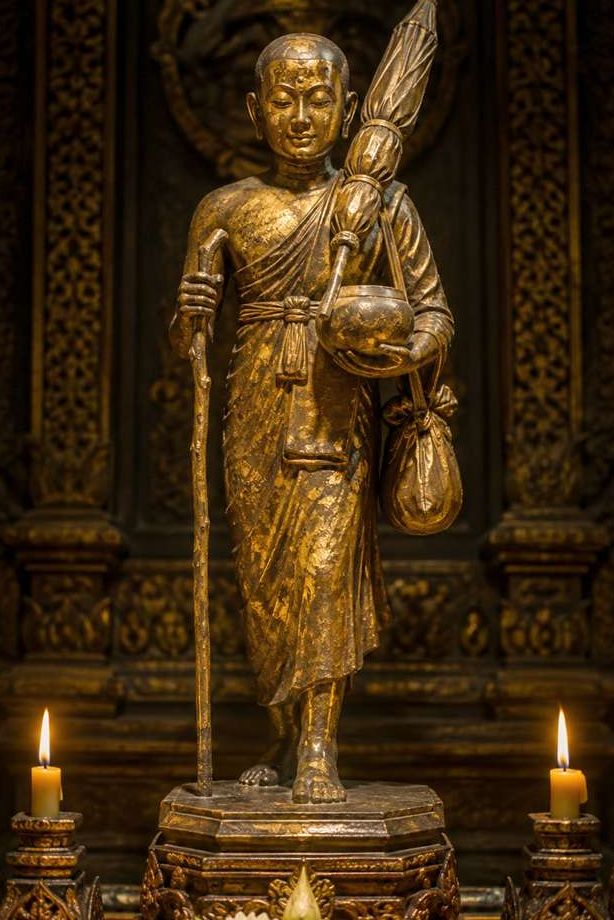
It is no accident that Phra Sivali appears in Supawadee's story. This direct disciple of the Buddha was declared foremost in receiving offerings: wherever he went, the community lacked nothing. But tradition insists on the logic of that abundance: it is the fruit of generosity accumulated over countless lives. A Sivali amulet is not meant to excuse one from giving — it is meant to remind one to give. Exactly like Nang Kwak.
Chuchok, the other figure of prosperity
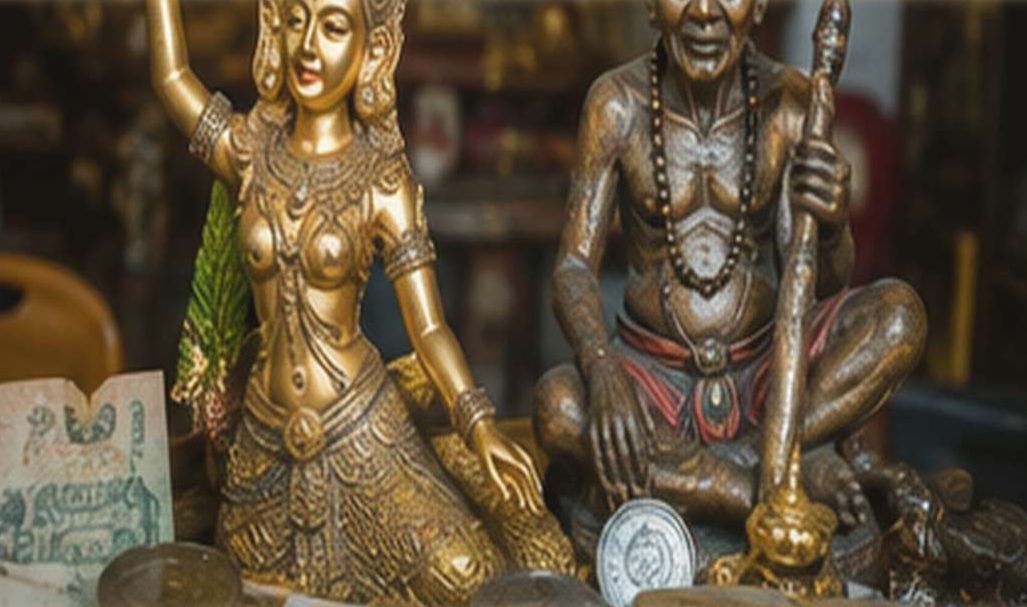
Chuchok (Jujaka in Pali) comes from a very different register: the Vessantara Jataka, the story of the Buddha's penultimate life. He is an old, stooped, starving Brahmin beggar who goes as far as asking Prince Vessantara for his own children. His morals are questionable; what people remember is his skill. Cunning, insistent, never short of arguments, he always gets what he came for — the art of negotiating and closing a deal that his statuettes are meant to pass on. Hence his pairing with Nang Kwak in so many Thai shops: one draws the customers, the other closes the sale.
Where to place Nang Kwak
She is placed in plain view: at a shop entrance, or on the household altar. Where an image of the Buddha is also present, it always takes the highest place. As with any sacred figure, avoid setting her on the floor or in places considered impure. And, in the temples' version, remember the essential: Nang Kwak accompanies conduct rather than replacing it.
Frequently asked questions
What does Nang Kwak mean?
“The lady who beckons with her hand”. Kwak (or gwak) is the Thai gesture of calling someone over: palm down, fingers curled towards oneself — it means “come here”, not “goodbye”.
Nang Kwak or Nang Gwak: which spelling?
Both. Nang Kwak is the official (RTGS) transliteration; Nang Gwak is the collectors' spelling, closer to the pronunciation, and the one used in the book.
Where should a Nang Kwak statue be placed?
In plain view, at the entrance of a shop or on the household altar, to draw customers and prosperity. She is often placed beside Chuchok.
See also: deities of prosperity · Kuman Thong · the glossary.
Go further with the book
This page covers only a small part of SAIYASART — The Great Book of Sacred Magic of Thailand: 33 chapters in full colour, 30 families of amulets and talismans, and a 120-term glossary.