Thai magic and culture
For travellers and the anthropologically curious: what Thais believe, honour and practise, from everyday spirits to the great temples.
To understand Thailand, you have to understand that it rests on the meeting of two worlds far older than itself. On one side, Theravada Buddhism, which arrived from India and Sri Lanka more than a thousand years ago and shapes the country's morality, meditation and monastic life. On the other, an animist and Brahmanic foundation inherited from the Mon and Khmer peoples, filled with deities, guardian spirits and unseen forces.
The genius of Thai culture has been never to set these two worlds against each other. A monk may recite a Pali sutra and, in the same ceremony, invoke Brahma or Shiva without anyone seeing a contradiction. This synthesis has a name: Saiyasart.
Saiyasart does not need to be reminded from outside that malevolent magic comes at a price: it says so itself, and always has.
SAIYASART, chapter 2
The people of the spirits
The Thai word phi is lazily translated as “ghost”. It covers far more: the spirit of the dead, the genie of a tree or river, the guardian of a house, the nameless presence at a crossroads. Some receive daily offerings, others are feared; most are simply there, and people get along with them as they would with neighbours.
Travellers see their traces everywhere without always noticing: tree trunks wrapped in satin ribbons for the spirit within — the most famous being Nang Takhian, the lady of the ironwood tree; garlands and sweet drinks left by the roadside at the exact spot of a fatal accident, to appease the spirit of someone who died suddenly. It is not a memorial; it is a presence being soothed.
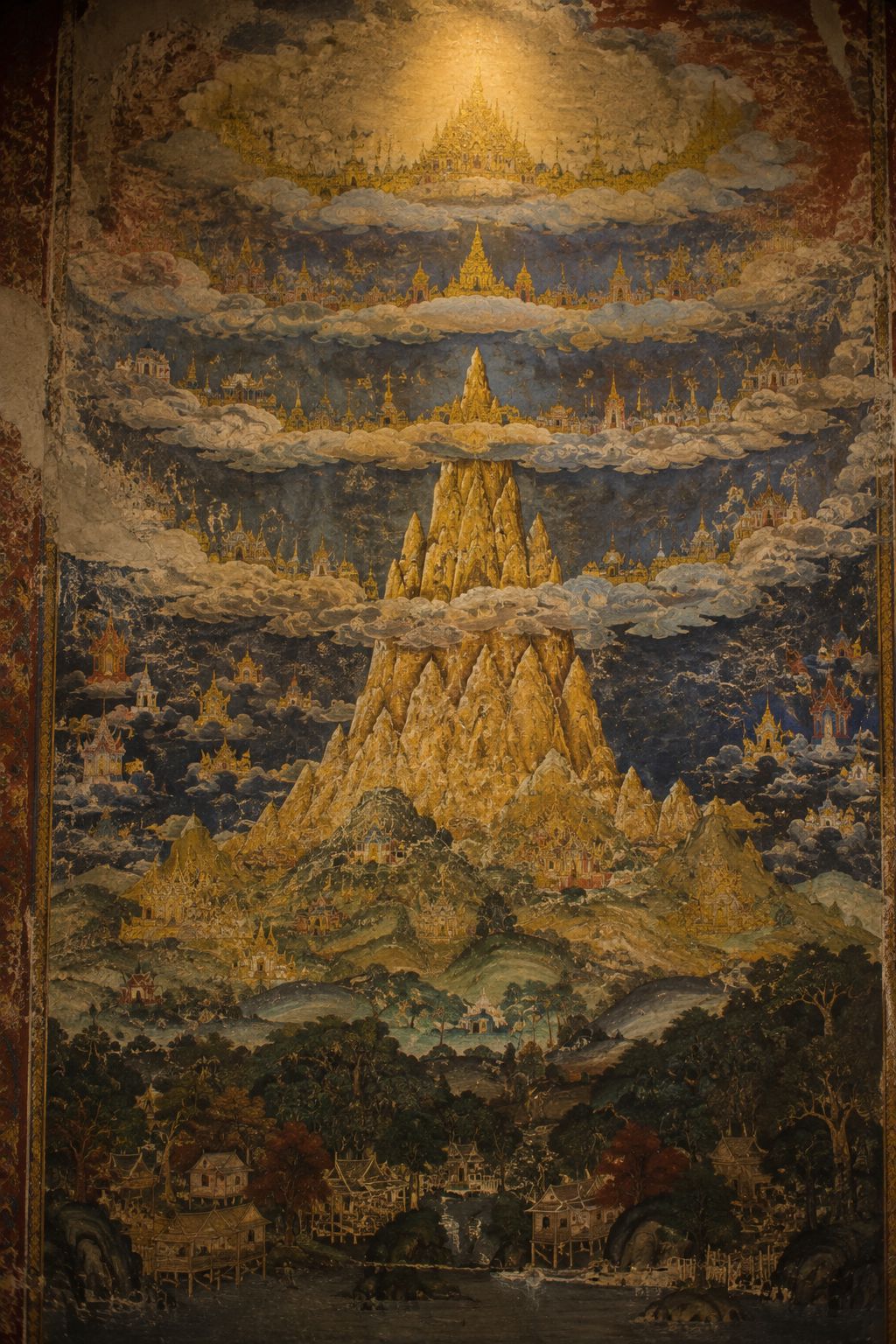
Thai cosmology is an ordered structure: six heavens rise above the human world, from the heaven of the Four Great Kings — home to most occupants of spirit houses — up to the worlds of Brahmā. But none of their inhabitants has left the cycle of rebirth: that is why they can be honoured without contradiction, and why one takes refuge elsewhere.
Explore
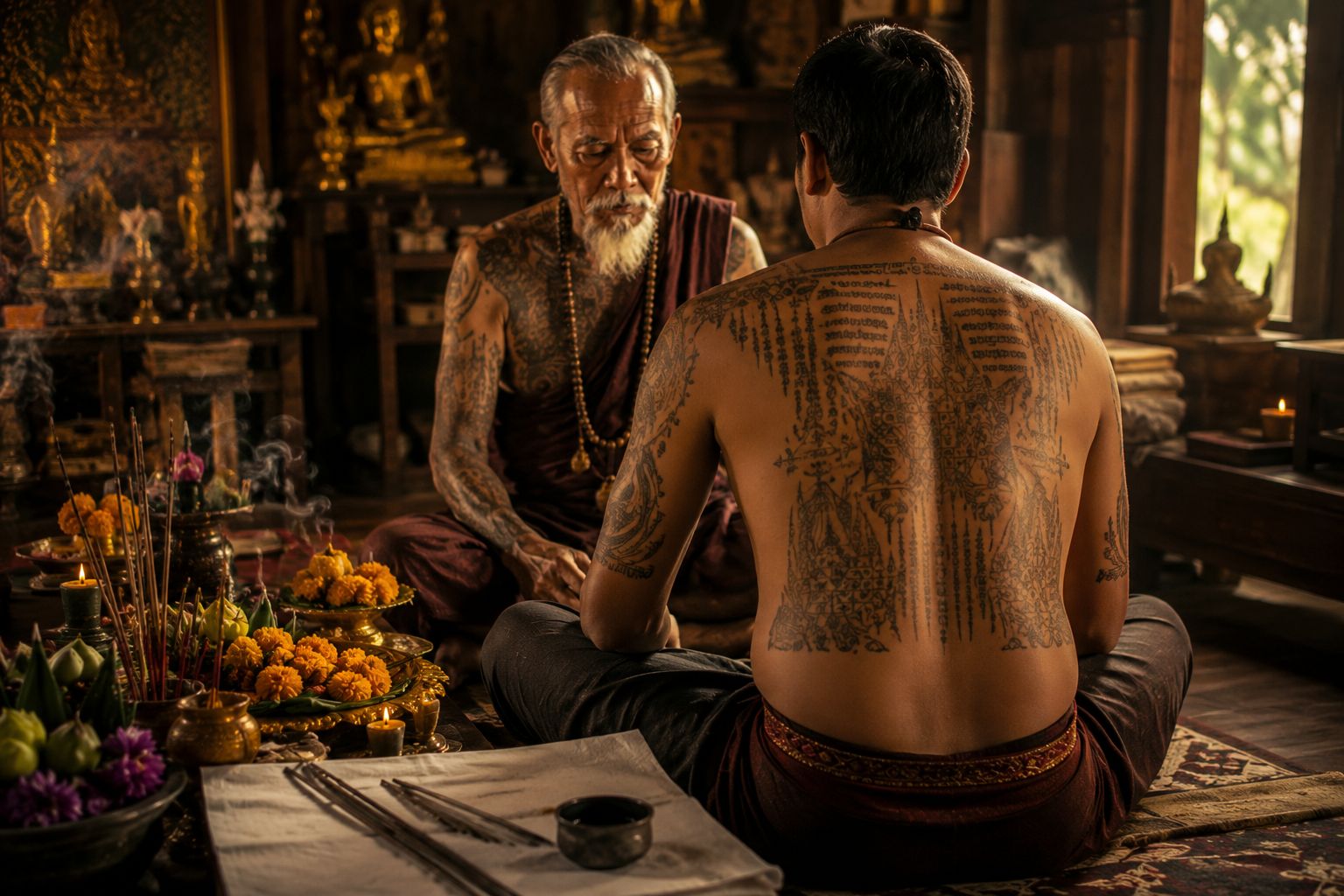
Sak Yant
Origins, great masters, how a session unfolds, the rules and hygiene: what to know before getting tattooed.
Read →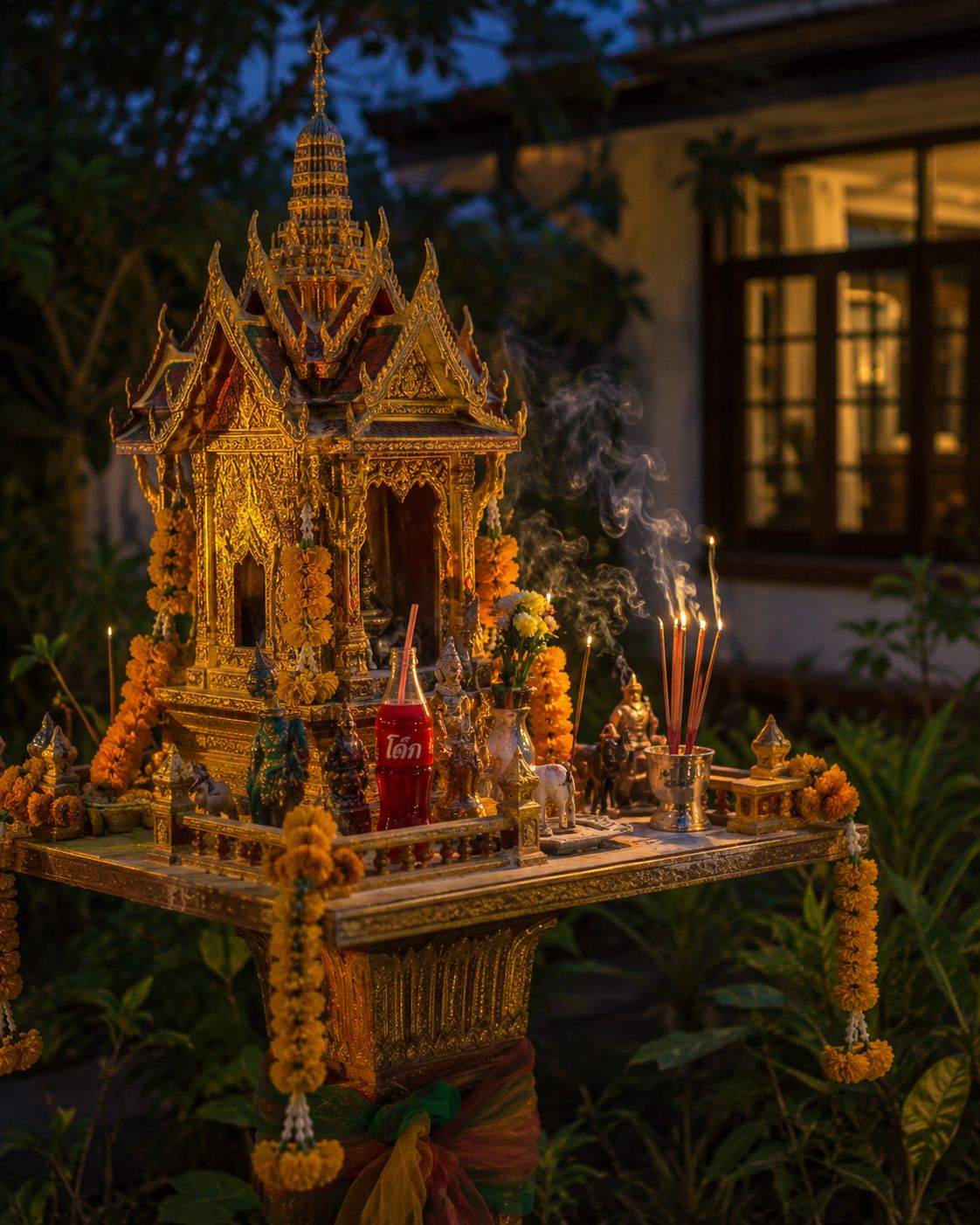
Spirit houses and altars
One pillar or four, how many incense sticks, and the meaning of poured water.
Read →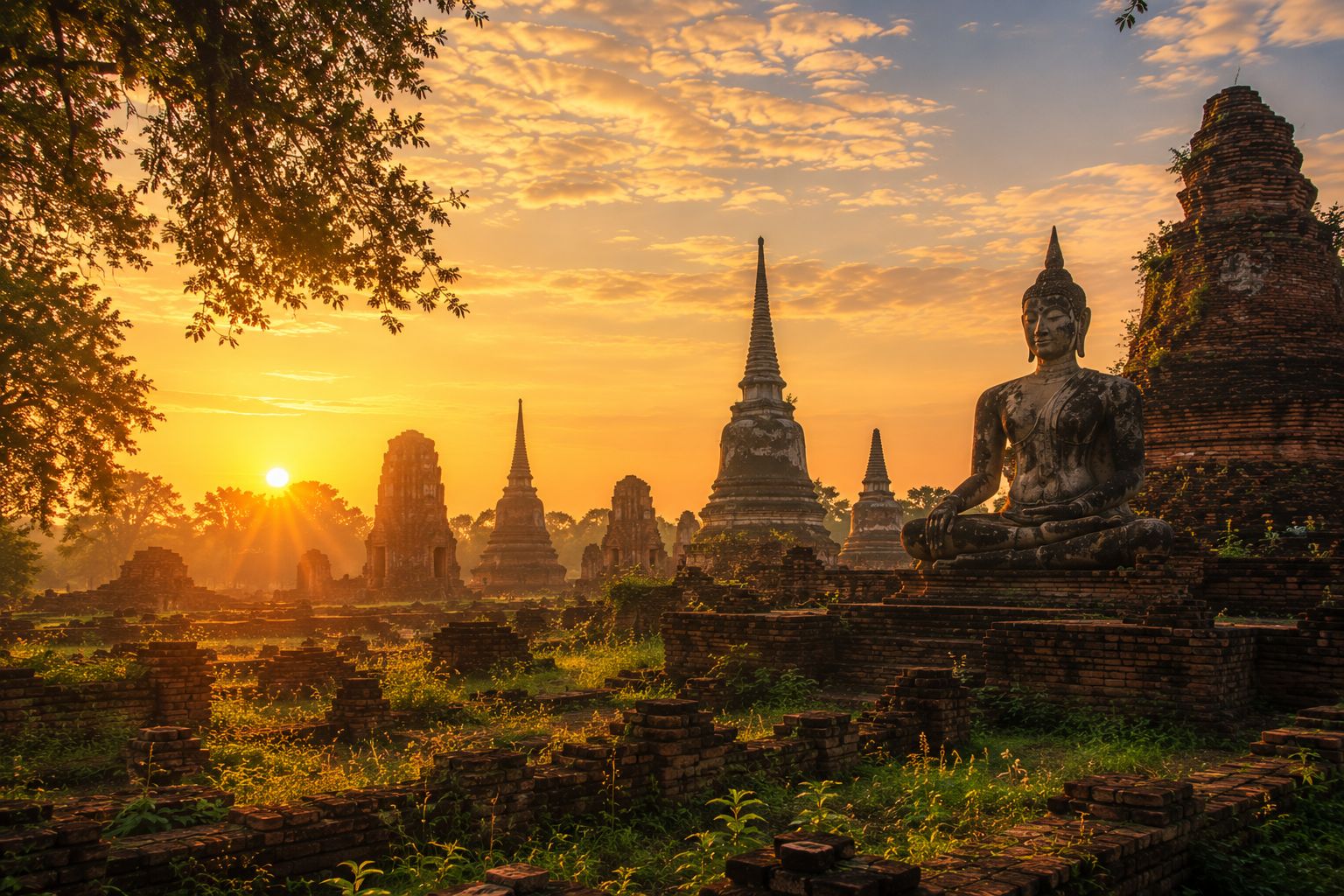
Temples and places to visit
Fifteen places linked to amulets and Sak Yant, and temple etiquette.
Read →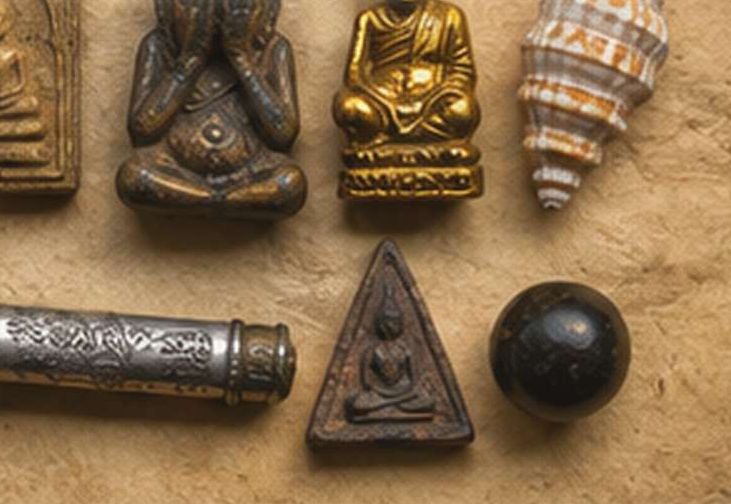
Amulets and talismans
The 30 major families, and the difference between Phra and Krueang Rang.
Read →The eight eras of statuary
A visitor entering the National Museum in Bangkok always feels the same thing: the Buddhas all look alike, and yet none really resembles the one before. Thai tradition sorts this diversity into eight styles, which overlap because they belong to kingdoms that coexisted:
| Style | Period (approx.) |
|---|---|
| Dvaravati | 6th–11th century |
| Srivijaya | 8th–13th century |
| Lopburi (Khmer art in Siam) | 11th–14th century |
| Chiang Saen or Lanna | 11th–18th century |
| Sukhothai | 13th–15th century |
| U Thong | 12th–15th century |
| Ayutthaya | 14th–18th century |
| Rattanakosin | 1782 to the present |
Knowing them is not idle scholarship: it is the only way to date a statue roughly, to place an amulet, and to understand why two pieces of the Benjapakee look nothing alike.
An ethnographer's view
Thai amulets are also a subject of study. As early as 1926, Pierre Lefèvre-Pontalis published in the Annales du musée Guimet a study of Siamese amulets he had collected himself from boatmen of Upper Siam, in the Kamphaeng Phet region. They wore them rolled in the scarf that served as their belt, alongside their tobacco and lighter — objects as ordinary as any personal belonging. A century later, the work reminds us that beyond devotion and the market, these objects shed light on the religious history of a whole region.
Frequently asked questions
What is Saiyasart?
The Thai word covering all the occult sciences, ritual practices and magical knowledge passed down from master to disciple, often orally. It grew from the meeting of Theravada Buddhism with a much older animist and Brahmanic foundation.
Do Buddhist Thais believe in spirits?
Yes, without contradiction: Buddhist texts do not deny the existence of spirits and deities, they place them in the same cycle as humans, subject to karma and impermanence. One may honour and appease them; one does not take refuge in them.
Go further with the book
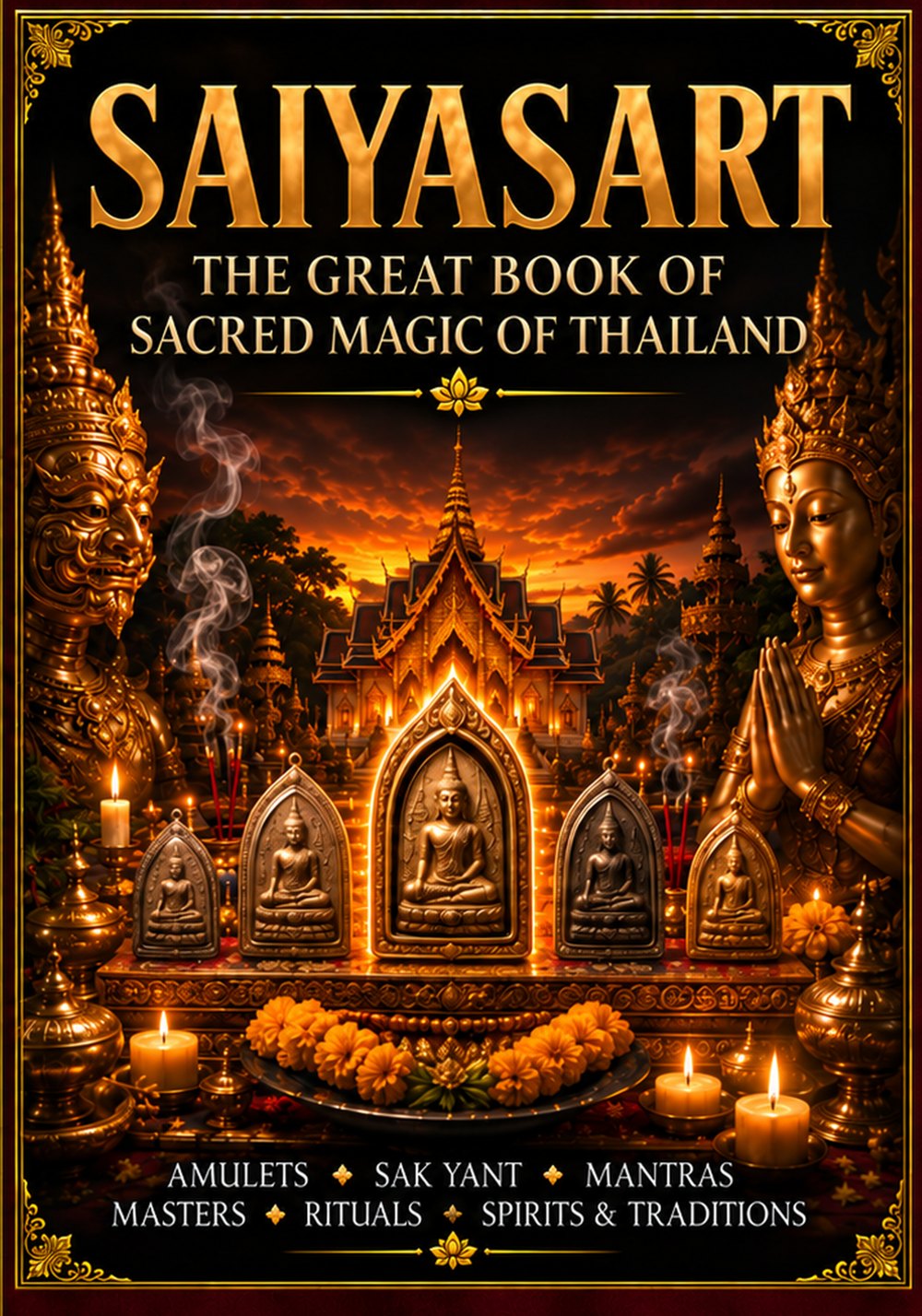
This page covers only a small part of SAIYASART — The Great Book of Sacred Magic of Thailand: 33 chapters in full colour, 30 families of amulets and talismans, and a 120-term glossary.