Thai amulet collector's guide
The Benjapakee, materials, spotting fakes, reading a listing, certificates, and how to wear your amulets.
Contents: The Benjapakee · Amulets and talismans · Materials · Spotting fakes · Reading a listing · Certificates · Wearing and care
The Benjapakee, the five supreme amulets
The word means “the five associates”. The ranking is no ancient legend: it was formalised around 1952 by a collector and writer who signed himself Triyampawai. In more than seventy years, no other amulet has displaced any of the five.
| Amulet | Region | Origin | Reputation |
|---|---|---|---|
| Phra Somdej | Bangkok | Workshop of Somdej Toh, Wat Rakang, 19th century; lime powder and sacred ingredients | The “king”: the most prestigious and most copied |
| Phra Nang Phaya | Phitsanulok | Ayutthaya period; rediscovered around 1901 at Wat Nang Phaya; triangular | Charisma, grace, respect, and protection |
| Phra Rod | Lamphun | Hariphunchai kingdom; found in a stupa of Wat Mahawan under Rama V | Escaping danger (Klaew Klaad) |
| Phra Phong Suphan | Suphanburi | Pressed clay | Protection from physical danger and weapons |
| Phra Somkor | Kamphaeng Phet | Paste rich in golden particles | Protective stability, resistance to weapons |
The five cover five distinct historical regions. The symbolic readings sometimes attached to them — five elements, five disciples — are late reconstructions.
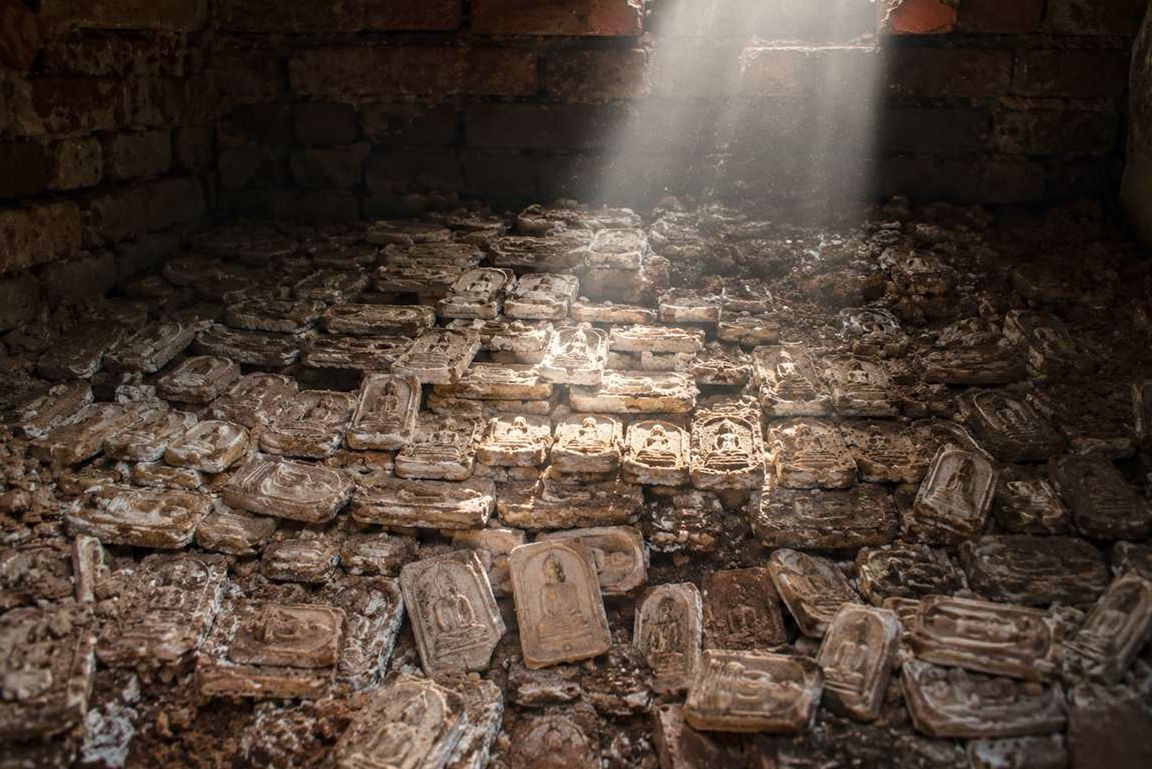
Four of the five are Phra Kru: amulets pressed by the thousand, often eighty-four thousand, then sealed beneath a sanctuary or stupa — not to hide them but to charge them. They have no known maker; villagers named them when they dug them up. The Phra Somdej, by contrast, has a known workshop, master, period and recipe: it is, properly speaking, the first signed Thai amulet. On an excavated amulet the expert first reads the earth; on a Phra Somdej, the recipe.
Amulets and talismans: Phra and Krueang Rang
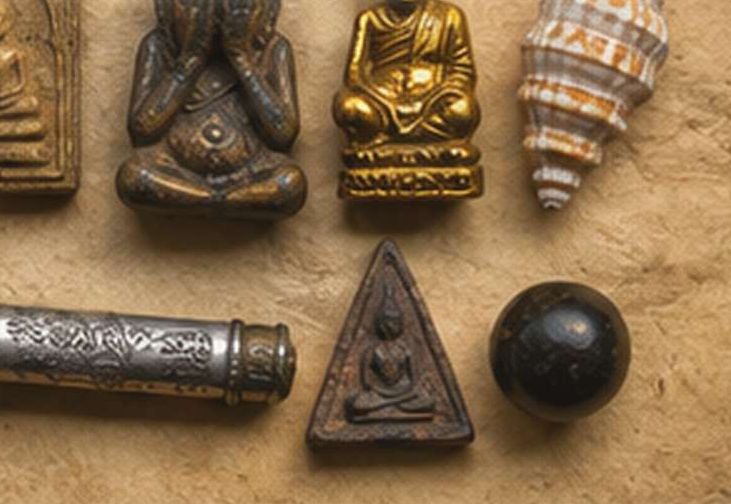
A distinction is almost always blurred in commercial listings. Phra are Buddhist objects consecrated by monks and tied to the temple network. Krueang Rang are talismans of animist or Brahmanic origin, made and charged by lay masters (Ajarn) in the Saiyasart traditions. Both coexist in everyday practice, but they serve different uses and are honoured in different places. The book describes thirty families (see the full list), among them:
- Phra Pidta — the Buddha covering his face with his hands: closing the senses, spiritual protection.
- Phra Kring — a seated Buddha containing a sealed bead; health and prosperity.
- Nang Kwak (Nang Gwak) — the lady who beckons customers and fortune into a shop.
- Chuchok — the cunning old beggar of the Vessantara Jataka, figure of the art of closing a sale.
- Takrut — a thin metal scroll (copper, silver, gold or lead) inscribed, rolled and sealed; once sewn into soldiers' belts.
- Lek Lai — a legendary mineral said to be alive; among the most coveted objects, and the hardest to authenticate.
- Kuman Thong (Gumarn Tong) — the “golden child”, a protective household effigy. Objects claimed to contain human remains are illegal in Thailand: refuse them.
- Palad Khik (Bpalad Khig) — a phallic talisman descended from the Lingam cult, worn at the belt for favour, trade and luck — never around the neck.
- Ruesi — the forest hermits, masters of plants and occult knowledge.
To see real pieces, each described with its temple, master and year, visit magie-thai.com.
Materials (Nuea)
Nuea literally means “flesh”: the material an amulet is made of — clay, powder, metal, bone — and, by extension, all the criteria used to examine it.
- Sacred powders — the Pong Phutthakhun are made by writing and erasing sacred formulas in Khom script, again and again.
- Muan Sarn — all the sacred ingredients of an amulet: ritual powders, rare plants, sometimes precious materials.
- Clay — the material of excavated Phra Kru, marked by centuries underground.
- Metals — for Takrut, or Nawaloha, a traditional alloy of nine metals used for some rings and amulets.
Spotting fakes
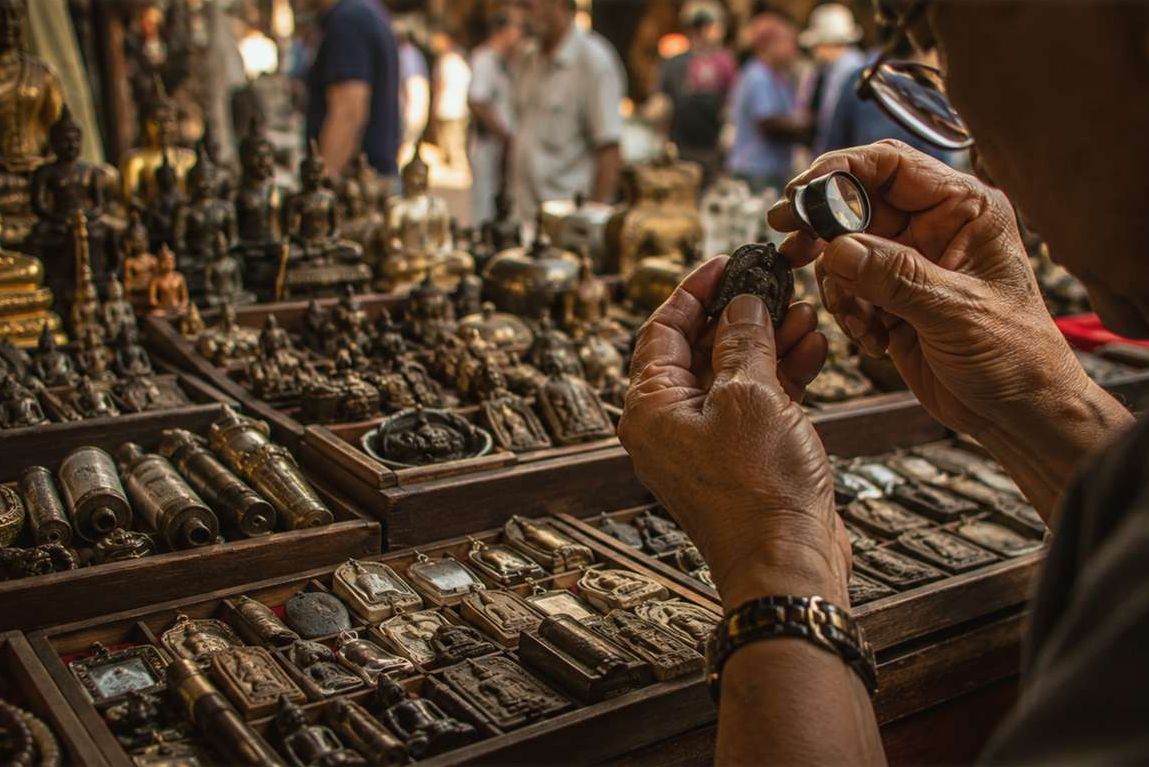
The market suffers from massive counterfeiting: the most serious estimates sometimes put it at more than nine pieces in ten on general auction platforms. A few simple signals:
- Beware of “power ratings” (“5 stars”): a piece blessed in a temple never needs that argument.
- Beware of abnormally low prices for a piece sold as rare or old: real consecration takes time and costs money.
- Insist on traceable provenance: a seller who visits the temples, or documents a piece's exact origin, offers a guarantee no anonymous marketplace can match.
A telling detail: in Thai you don't say you buy an amulet, you say you rent it (chao) — the sacred cannot be bought. A Western seller who talks about “renting” an amulet is telling you, without meaning to, that he knows his subject.
Reading a listing
A complete listing always gives, in this order: the master, the temple, the province, the year, the edition.
- LP = Luang Por or Luang Phu (depending on the monk's age), KB = Kruba (in the North), AJ = Ajarn (lay master).
- The year is given in the Buddhist Era, B.E.: subtract 543. B.E. 2512 = 1969.
- Run raek is the first series, consecrated in the master's lifetime: always worth more than later editions.
Do you need a certificate?
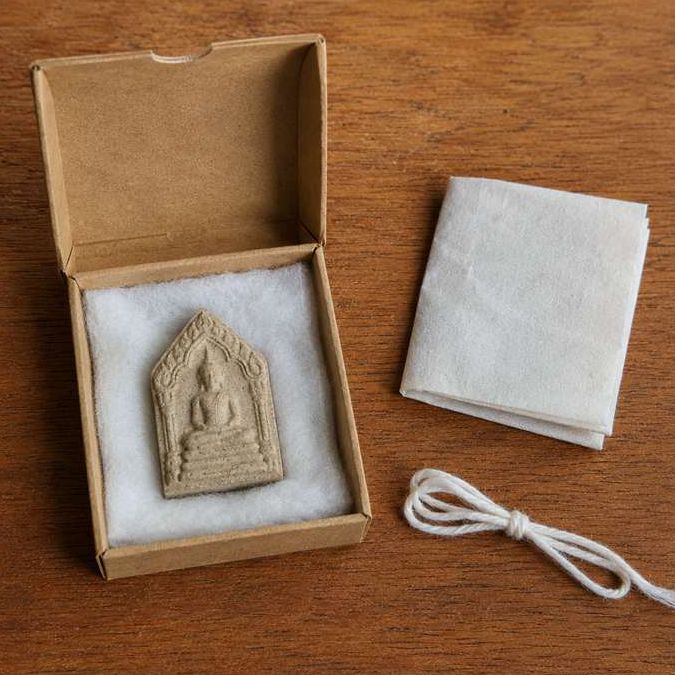
For most amulets — consecrated in recent decades and sold for a few tens of euros — the question doesn't arise: nobody certifies a piece worth less than the appraisal. What matters is provenance: a contemporary amulet should come from the temple that commissioned it, in its original box, often with the printed leaflet of its katha.
For valuable old pieces, collectors' associations authenticate amulets, the main one being the Samakom Phra: the piece is examined by a panel of at least five specialists and returned with a named card if judged genuine. Three precautions:
- Not all cards are equal: some attest an expert opinion only, others carry a financial guarantee.
- Fake cards exist: always check the number under the photograph online. Thirty seconds against hundreds of euros.
- A certificate issued by the seller himself certifies nothing: a guarantee only counts if the guarantor is not the seller.
Choosing, wearing, caring
Choose according to the intention that matches a real need — protection, serenity, success — rather than rarity. A modest amulet chosen sincerely is worth more, in the Thai view, than a prestigious piece worn without conviction.
- Most are worn around the neck, alone or in a small set: three pieces at most is a common convention.
- Images of the Buddha should not go below the waist, which is why they are rarely worn as bracelets or rings.
- Never place an amulet directly on the floor or in places considered impure.
- Follow the five precepts: a contrary conduct is believed to weaken the object lastingly.
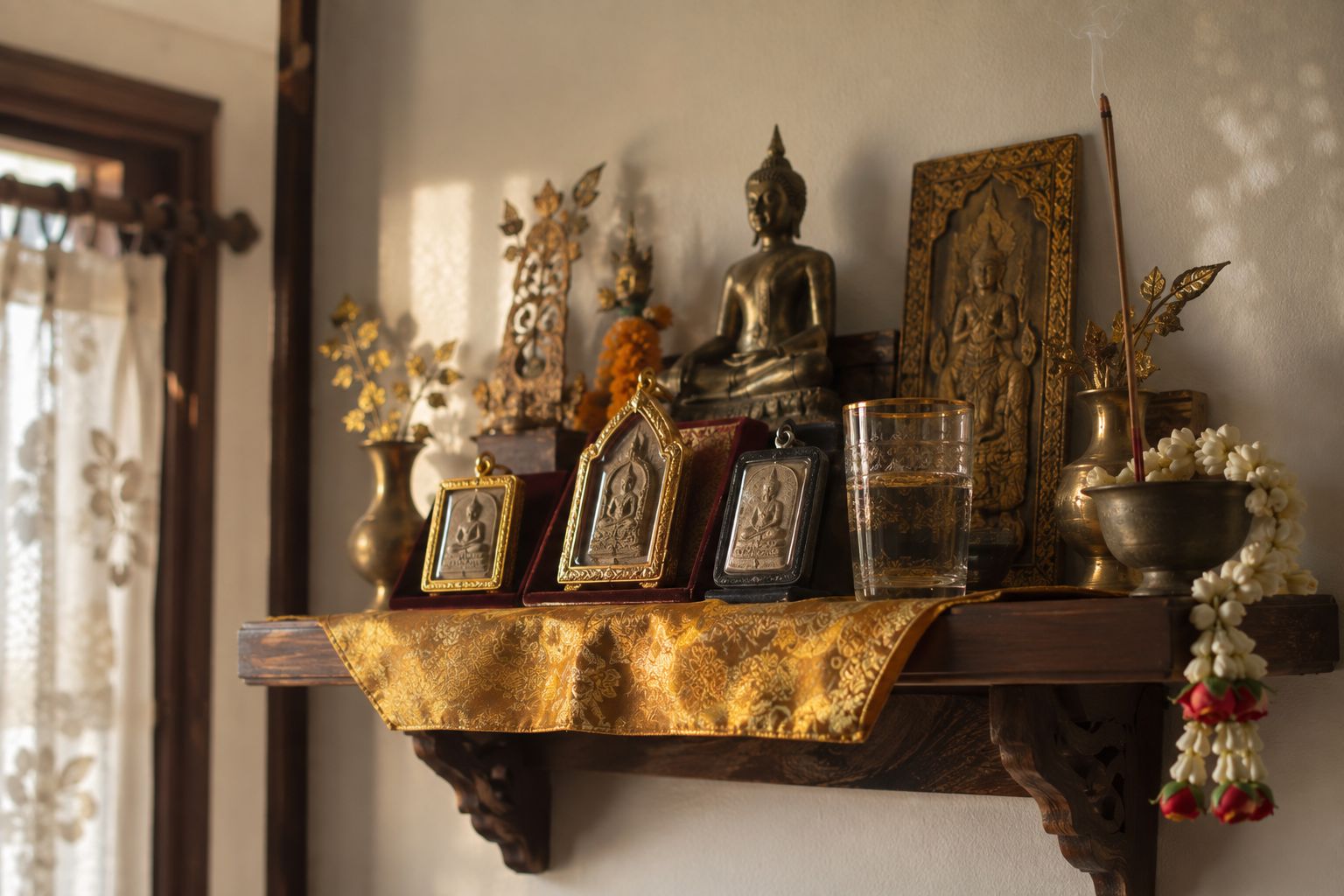
- Many Thai homes keep a small shelf where amulets rest during a shower or overnight.
Frequently asked questions
How can you tell if a Thai amulet is genuine?
For a contemporary amulet, provenance is what counts: the temple of origin, the box and the leaflet that come with it. For a valuable old piece, only an expert or a certification card verifiable online can be relied on.
What does B.E. mean on an amulet?
B.E. is the Buddhist Era, Thailand's official calendar. Subtract 543 to get the Western year: B.E. 2512 is 1969.
Why do Thais “rent” an amulet?
In Thai the verb used is chao, “to rent”: the sacred cannot be bought. The sum paid supports the temple and compensates the craftsman; the object is received in trust for a lifetime.
All the vocabulary is explained in the 121-term glossary.
Go further with the book
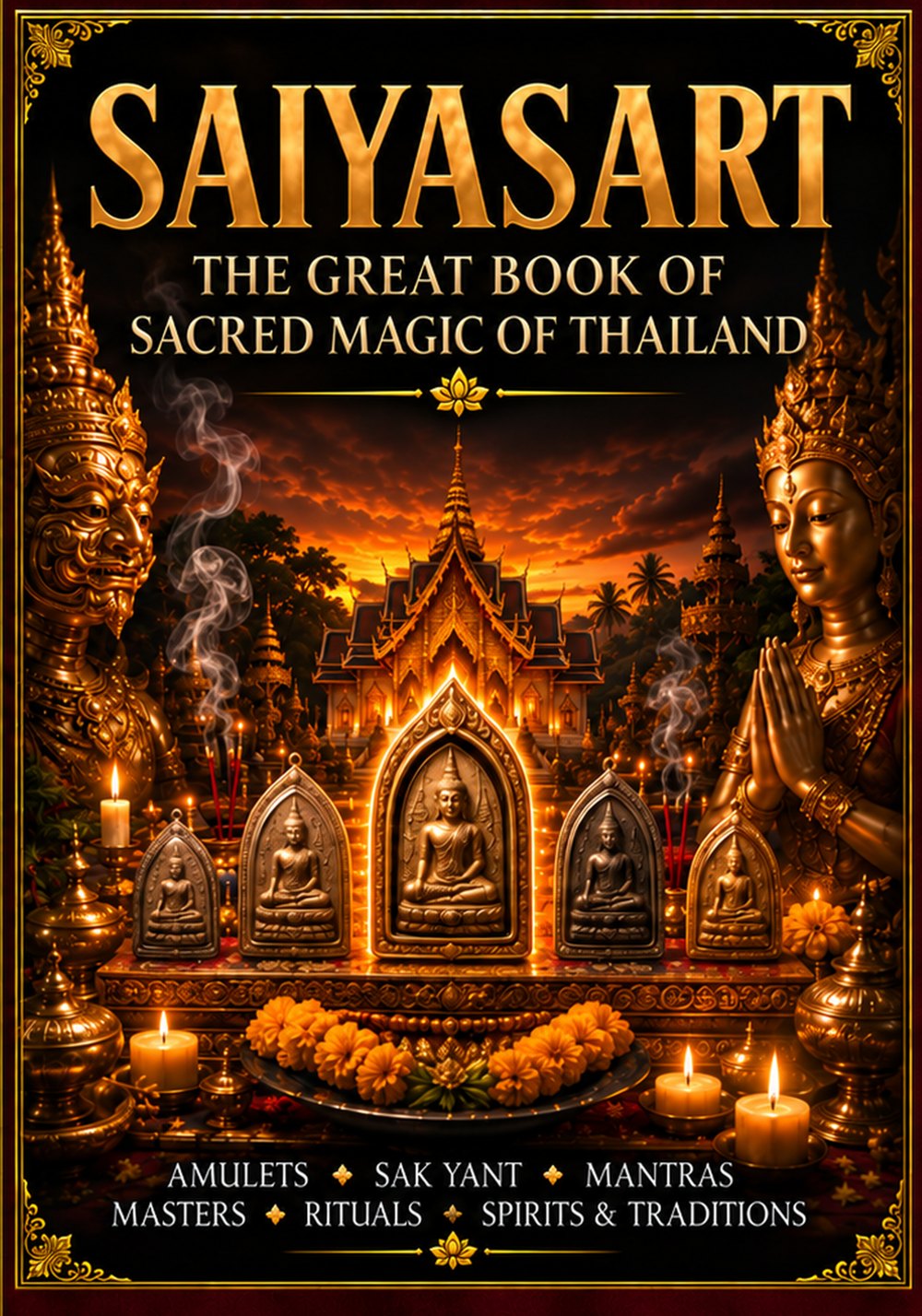
This page covers only a small part of SAIYASART — The Great Book of Sacred Magic of Thailand: 33 chapters in full colour, 30 families of amulets and talismans, and a 120-term glossary.