Temples and places to visit in Thailand
Fifteen places linked to amulets, Sak Yant and statuary, and the rules to know before entering a temple.
Thailand has more than forty thousand active Buddhist temples, from the humblest village shrine to the vast royal complex. That density, and centuries of religious continuity never broken by colonisation, make the country one of the most living repositories of Theravada Buddhism: nowhere else do amulets, sacred tattooing and statuary coexist with such richness.
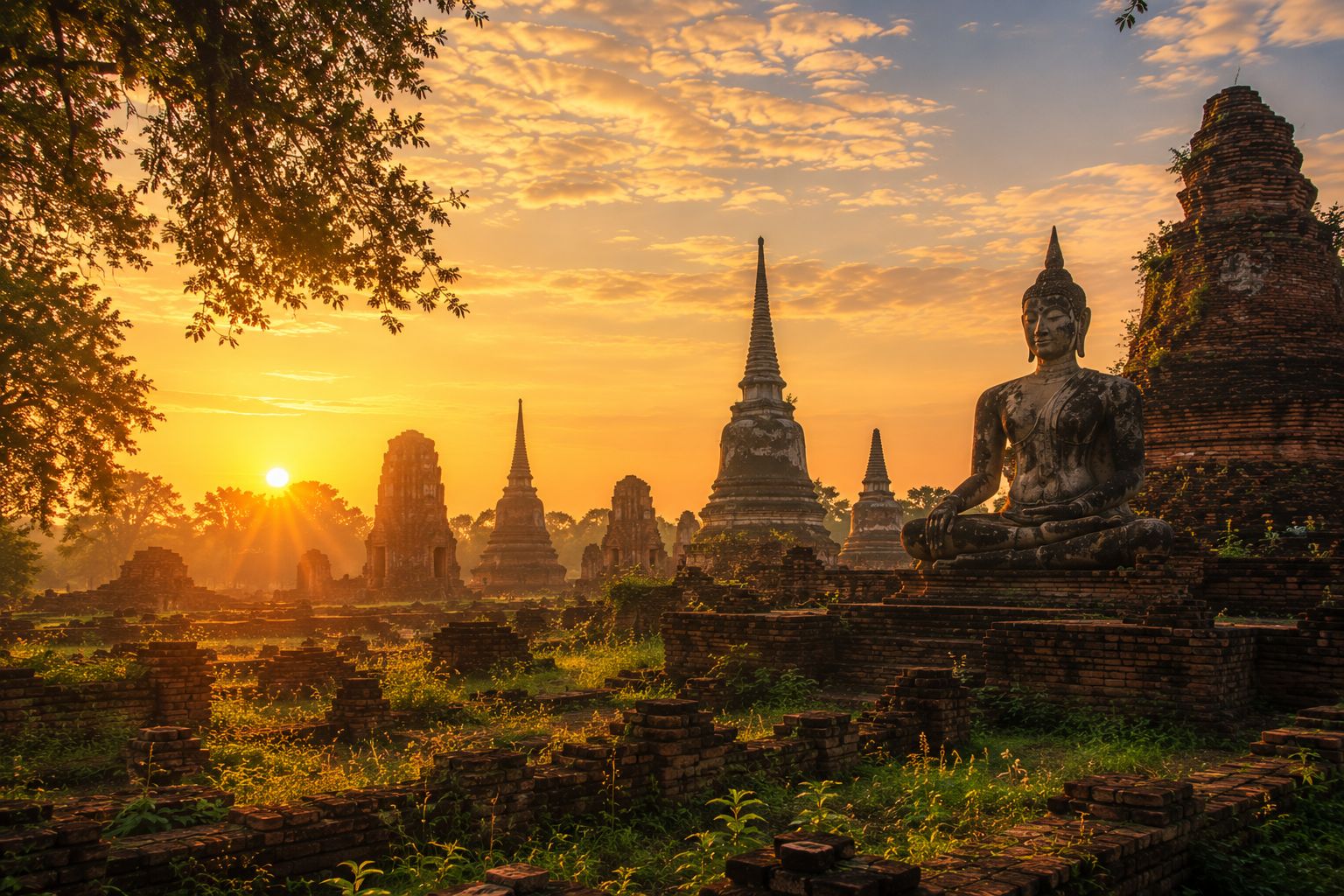
Fifteen places to visit
A selection of places directly linked to amulets, Sak Yant and statuary — with no claim to be exhaustive.
- Wat Rakang Kositaram · Bangkok
- The temple of Somdej Toh, where the first Phra Somdej were born. A pilgrimage for any amulet lover.
- Wat Intharawihan · Bangkok
- Where Somdej Toh died in 1872, on the building site of the great standing Buddha that still towers over the district.
- National Museum · Bangkok
- The most complete collection of Thai Buddhist sculpture: the eight eras at a glance.
- Ta Prachan market · Bangkok
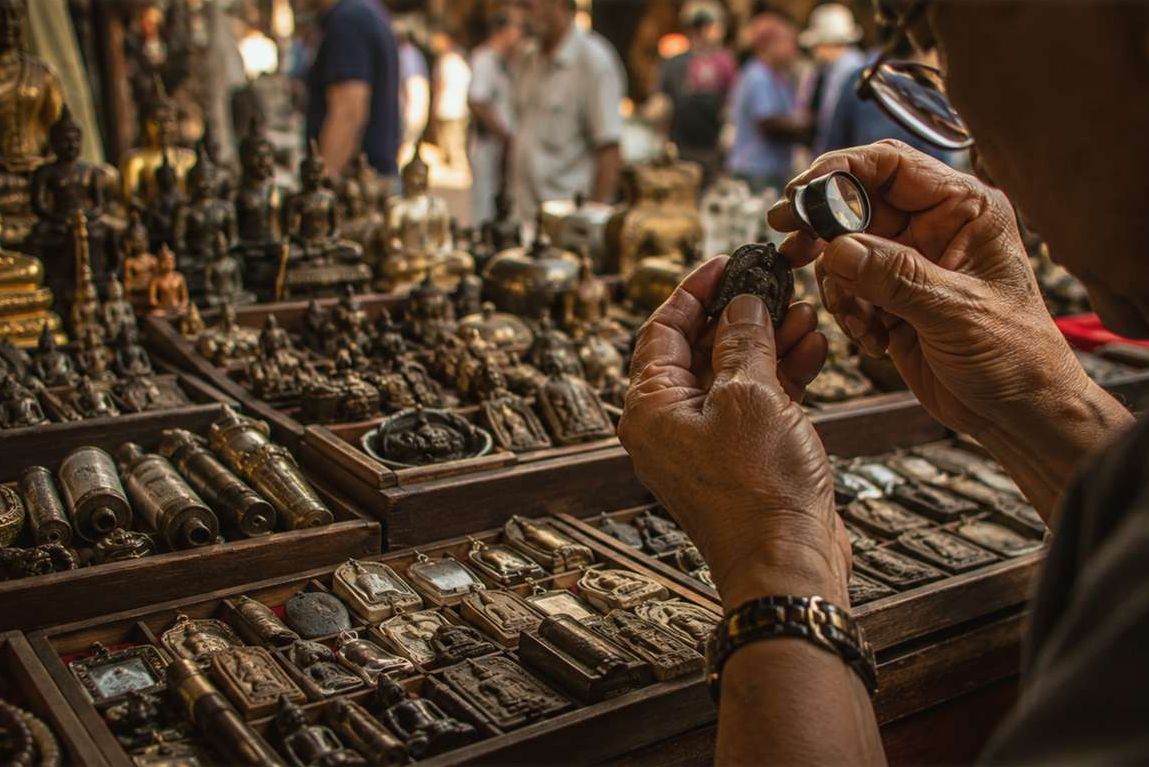
- The country's oldest amulet market. One comes less to buy than to learn how to look.
- Wat Mahathat Yuwaratrangsarit · Bangkok
- Next to the market, a major Vipassana meditation centre that welcomes foreigners for short retreats.
- Wat Suthat · Bangkok
- Royal temple famous for its giant red swing and rich statuary.
- Wat Bang Phra · Nakhon Pathom
- The temple of Sak Yant and the annual Wai Kroo, about an hour from Bangkok.
- Wat Sam Ngam · Nakhon Pathom
- The temple of Luang Por Te, the reference for the Kuman Thong, under an hour from Wat Bang Phra.
- Ayutthaya · Central
- The old capital, and the Buddha head embraced by banyan roots at Wat Mahathat.
- Suphanburi · Central
- Origin of the Phra Phong Suphan, and province of Khun Phaen, whose memorial stands at Wat Pa Lelai.
- Sukhothai Historical Park · Lower North
- The golden age of statuary: the walking Buddha and that continuous line found nowhere else in Asia.
- Kamphaeng Phet · Lower North
- Historic town listed as World Heritage with Sukhothai, quieter, and home region of the Phra Somkor.
- Wat Phra Si Rattana Mahathat · Phitsanulok
- Home of the Phra Phuttha Chinnarat, considered by many the most beautiful Buddha in the country. Origin of the Phra Nang Phaya.
- Wat Mahawan · Lamphun
- The temple of origin of the Phra Rod, in the old Mon capital of Hariphunchai, thirty kilometres from Chiang Mai.
- Chiang Mai and its region · North
- The heart of the old Lanna kingdom, where many Sak Yant studios remain active.
The book's advice: buy nothing during the first half of the trip. Look, compare, handle. The collector is trained by the eye before being trained by the wallet, and the pieces one regrets are almost always those of the first few days.
Temple etiquette
Visiting a temple follows simple but firm rules; breaking them, even unintentionally, tends to come across as carelessness rather than excusable ignorance:
- Dress: shoulders and knees covered, for men and women alike.
- Shoes: off before entering any building that houses a Buddha image.
- Feet: never point them towards a Buddha image or a monk; when seated, tuck them behind you.
- Monks: a woman never touches a monk or hands him anything directly — the object is placed on a cloth or surface he picks up himself.
- Photos: statues and architecture, yes; an individual monk, only with his permission.
- Incense: three sticks before the Buddha, never one (see the incense rules).
In almost every temple, a row of statues shows the Buddha of each day of the week, each in a different posture. The faithful head straight for the one of their birth day, leave a coin and light a stick of incense.
Frequently asked questions
How should I dress to visit a temple in Thailand?
Shoulders and knees covered, for men and women alike. Shoes come off before entering any building that houses a Buddha image.
Can a woman touch a monk?
No. A woman never touches a monk directly or hands him anything: the object is placed on a cloth or surface that the monk picks up himself.
Where can I see amulets in Bangkok?
At the Ta Prachan market, by the river near Wat Mahathat, the oldest and largest in the country. Go on a weekday in late morning: big weekend markets are overwhelming for a beginner.
Go further with the book
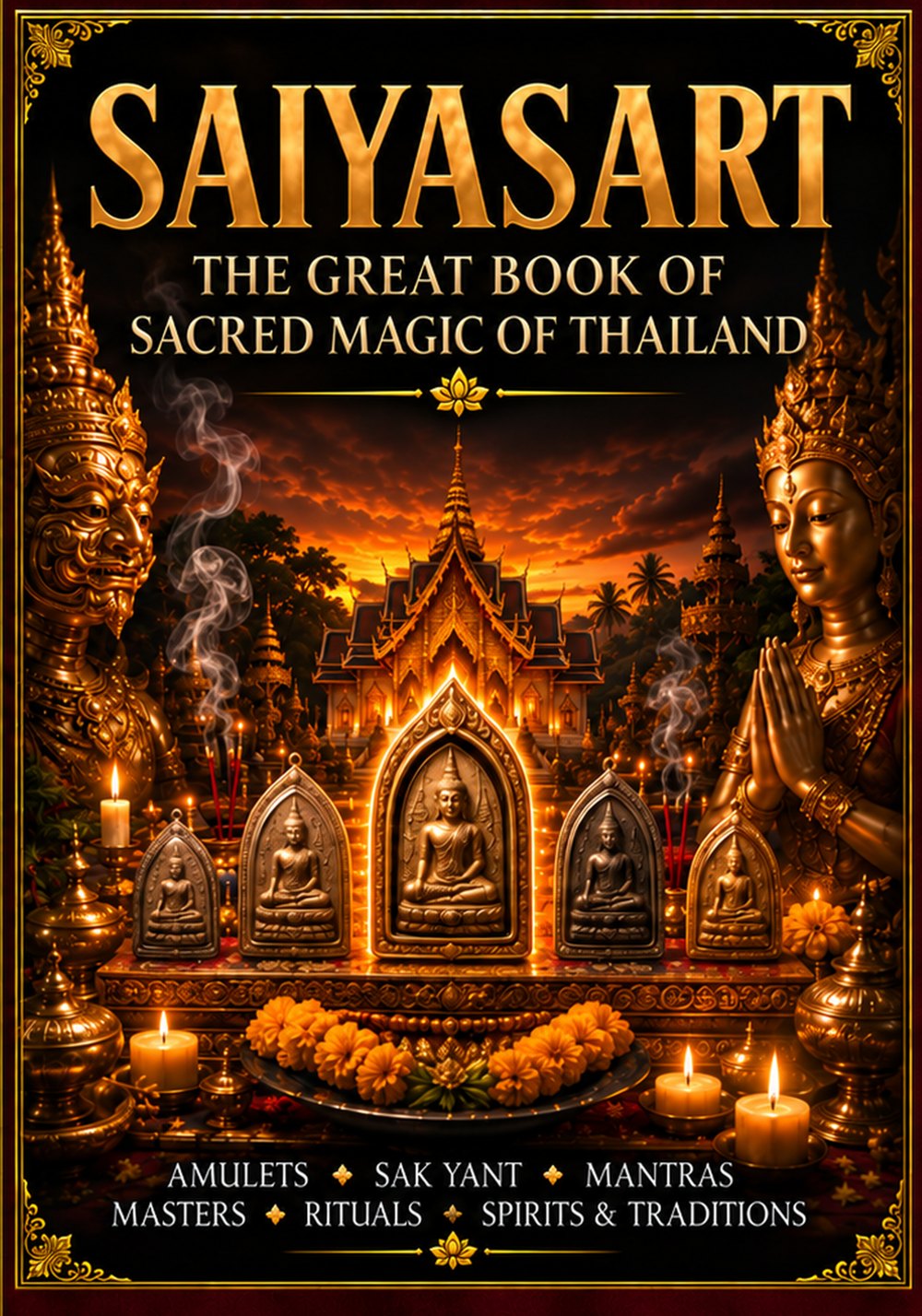
This page covers only a small part of SAIYASART — The Great Book of Sacred Magic of Thailand: 33 chapters in full colour, 30 families of amulets and talismans, and a 120-term glossary.